Showing posts with label splatterpunk. Show all posts

Wednesday, February 14, 2024

Wet Work by Philip Nutman (1993): Too Tough to Die

In 1993, in my early 20s, I was working in a giant chain bookstore known as BookStar in Cary, NC. It was basically a Barnes and Noble (who eventually bought, rearranged, and then closed down the store), guys had to wear ties and dress pants, like it was fucking church. Several of my coworkers were horror fiction fans, both of the modern and classic variety, and we wasted many a working hour talking about the genre while ignoring our shelving duties. At this time the horror mass-market paperback boom was beginning its downhill swing, although I well recall the publication of many a serious title around then: Animals by John Skipp & Craig Spector, Lost Souls by Poppy Z. Brite, After Age by Yvonne Navarro, Skin by Kathe Koja, Grimscribe by Thomas Ligotti, The Golden by Lucius Shepard, as well as the continuing, final titles from the Dell/Abyss line. And in June came Wet Work, published by Jove Books, the first novel from young British author and journalist Philip Nutman.

I already knew the author's name from various Fangoria articles as well as a few of his short stories. They were good, smart, effective, and I remember shelving fresh new copies of Wet Work and thinking it might be worth a read. The critical blurbs came not from, you know, the newspaper reviewers but from fellow horror scribes like Clive Barker, Kathe Koja, Douglas E. Winter, Nancy A. Collins, Skipp n' Spector themselves, and Stephen King as well (although we've  learned how unreliable a King quote can be). All a good sign to me!


And yet—I didn't read it. My taste for the genre was waning some; sure, I was rereading some favorites but not really keeping up any longer. Like I said, I could tell the boom was slowing down, despite some interesting works arriving. This was when I was getting into my hardboiled/crime/noir phase, James Ellroy, Jim Thompson, Woolrich, Cain, Chandler, James Lee Burke. Tastes change, you gotta go where your heart leads you.

So when I finally got around to Wet Work last week, I wasn't sure if it was gonna read like a last gasp or a fresh breath. Turns out, it was neither, and it didn't need to be: it's simply a briskly-told horror novel of a zombie apocalypse. Ignore the "epic terror" comparison to The Stand on the cover; compared to King's mammoth-sized tome, Wet Work is a wee little rodent, scurrying about busily while getting the job done in a fraction of the pages.

It's radiation from a comet that sets things off, akin to the space probe origins of the zombies in the original Night of the Living Dead. Sections of the first half resemble the early parts of the 1978 Dawn of the Dead, although these characters don't know yet that they're dealing with the undead. All this is no ripoff or plagiarism, however: Wet Work is an expansion of a Nutman short story of the same name, and it was first published in 1989 in the essential undead anthology Book of the Dead, borne upon us by Skipp n' Spector. A major work of the splatterpunk movement, it featured stories all written in the ghoulish universe of Romero's (then-) trilogy of zombie horror movie classicks.

2005 reprint by Overlook Connection Press

Any consumer of popular entertainment, horror or not, will be right at home in the familiar environs of Nutman's various characters and settings: secret military assassins, rookie cops, seasoned cynical cops, adults with dying parents, the lovelorn, the alcoholic, the teenage dirtbag, the cheating rich, the drug dealer, the junkie, DC/NYC, the airport, the strip club, the lab, the White House. Nothing to criticize, really; Nutman fills in color and detail no matter where he's describing. It's all as immediate as any movie or TV show, slick but not shallow, but not overladen with heavy meaning or a desire to upend tradition. His prose is lean, cynical, our tale starting off with the whitehotwhiteheat italics and ...ellipses... so beloved of the splatterpunks, what better way to get to the meat of the matter?

Skipping in well-played rhythms, Nutman shuffles his plotlines well, not lingering too long on any one locale. This is a skill I wish more horror writers had mastered: the thrust of narrative, the propulsion of story, the ability to convey movement in time forward while invoking a sense of impending doom overall. Nutman's background as a film historian has to account for his crisp, capable hand at this task, as the novel is cinematic as hell. Horror violence and gunplay action mingle here expertly.

Nutman didn't write another novel, I'm not sure why and couldn't find out, but did write comic books and more short stories, collected in 2010's Cities of Night. He died just over 10 years ago; it's a little sad to see all these encomiums from his colleagues praising his talents and to know he wouldn't add to his bibliography. Maybe with the end of the paperback era he just couldn't get another publisher interested in a full-length horror novel? I also feel bummed because in spring 1994 I attended a comic book convention in Durham with a coworker pal, and saw Nutman himself engaged in a lively conversation with one of the movie memorabilia sellers, and I thought, hey, you should go chat with him, tell him you liked his stories... but I did not! Damn.

Overall Wet Work is a short sharp shock of splat fiction, never dwelling too long on any character(s), moving at a brisk pace as the end of the world approaches. Not that the story is shallow or insipid, it's just that Nutman knows that we know how the story goes, and isn't trying to reinvent the wheel. His fresh take on zombie myth isn't exactly mind-blowing, but it is interesting enough to keep even a seasoned horror fic fan reading to the bleak, downbeat ending. Who'd want it any other way?

Monday, May 30, 2022

The Bridge by John Skipp & Craig Spector (1991): The Ultimate Sin

The horror genre isn't generally thought of as being socially conscious, and historically was often seen as just the opposite. This has changed most notably in the last few years, but back in the Eighties and into the Nineties, horror entertainment was more a place to indulge in anti-social behaviors than in healthy ones. Famed splatterpunk duo John Skipp and Craig Spector, those "bad boys" of horror novelists, however, evinced an awareness of societal ills along with their penchant for depicting scenes of no-holds-barred graphic gore and violence in Eighties classicks like The Scream (1988) and The Light at the End (1986).

This aspect grew to the forefront by the time they published their ambitious second-to-last novel, The Bridge (Bantam Books/October1991/cover art by Lisa Falkenstern). This was adult, eyes-open horror, the guys were saying, writing about the here-and-now and not looking to horror for escape any longer: humans were no longer the sole items on the menu, for Earth itself (her self?) was on the chopping block. It was time to acknowledge that, ecologically, the planet was in dire straits.

Ecological horror stories were more a part of science fiction than horror (Skipp has often name-checked The Sheep Look Up, a 1972 dystopian novel by John Brunner, which depicts a world so polluted by human endeavors it is almost uninhabitable), but The Bridge is eco-horror in high gear. An impassioned plea for the state of our very planet that pulls no punches, it is an apotheosis of the authors' combined talents. That is, it has most of what's good about their work and some of what's bad, but it's all delivered with an earnest intensity. Dig the back-cover copy, which gives only a hint of what's lurking inside:

 
The good times start when two young redneck cousins, Boonie and Drew, working for Boonie's dad's dumping company, furtively chuck barrels of toxic waste into a nice secluded area in the Pennsylvania hinterlands, from the Black Bridge, a spot in the Codorus Creek (yes, a real place!). This is the breaking point, as S&S tell us in the pretentious italics that will run rampant throughout the novel, "a sin-eater since the Industrial Revolution, a chemical cessway" choked (illegally, of course) with the runoff of modern convenience: now a primordial stew giving birth to a new form of life, which S&S will dub "Overmind." And boy are we in trouble.

What results is so awful, so mind-bendingly terrifying, so rarefied and beyond man's ken that S&S have no choice but to revert to free verse poetry to describe it: 

born of poison
raised in poison
claiming poison for its own
it rose
a miracle of raw creation
hot black howl of life and
death intertwined and converted to
some third new option

 
2010 reprint, Leisure Books

And so on. It's "an enormous oily serpent" that "fractures physics, disembowels logic." It is made of rotting fish and broken barrels, the sludge and slurry of the creek, and it—the Overmind—wants the bodies and souls of us hapless littering mall-dwelling gas-guzzling dullards to wreak its vengeance. Host and parasite in one. Puppets of this sentient sludge. It devours and expels, creating a misshapen, oozing, zombie horde to act as avatars of our own destruction. It is the literal embodiment of the processes that created it: the greedy, insatiable eating machine. Shoveling resources in the one end, shitting poison out the other. A fat, blind, dying carcass, smothering all as it wallowed in its own excrement.

These grotesqueries on display are beyond reproach, offered up with spunky elan, gloopy and disgusting. This roiling mass of deformed life, "toxic ground zero," is eager to ingest everything it comes into contact with, to make it one with the Overmind. Reanimated bodies, human and helpless animal alike, march—or, more accurately, drive trucks filled with nuclear waste barrels—upon the unsuspecting small town of Paradise, PA: At the center of the only Hell that mattered. The Hell that mankind had created on Earth.

Our cast of characters is large, varied, as S&S dip down and then back up the social ladder. There are the aforementioned rednecks, duplicitous businessmen, young couples in love, a pregnant woman in crisis and her New Age friend, television reporters and crew, nuclear power plant workers, hazmat crew members, and teenage punk rockers. S&S keep things on the move, never lingering too long on any one narrative thread, spiking the wobbly narrative with odes to pain like a raggedy ratcheting metal fist, a screaming bonesaw violation so far beyond ordinary pain it boiled down endorphins and tortured the steam... blowtorching her mind into into crisp hyperclarity.

The Bridge is a perfect work of splatterpunk. And splatterpunk is not simply outrageous gore—it has heart, it has a conscience, an adolescent energy; it has raw primal emotions about injustice and disparity (y'know: punk) and the ironic confluence of the two is what made splatterpunk a thing. And if The Bridge has one thing, it's that: an emotional core of outrage, betrayal, injustice surrounded by a spiky, unruly, deeply pissed off surface eager to scrap, bringing mucilaginous pustular rotting amorphous tentacled things to a gunfight.
 
Our old buddy Harlan Ellison is surely one of the fathers of this righteous screed, as S&S shift into full-throttle, Deathbird Stories-style jeremiad mode, a kaleidoscopic apocalypse harrowing our souls, a beast screaming at the heart of the world. I was also reminded of the infernal parade in works like Clive  Barker's "Skins of the Fathers" and  Stephen King's "The Mist." Timely, modern movies like The China Syndrome, Network, and the soul-deadening BBC-TV movie Threads—which I first heard of when Spector mentioned it in Silver Scream—also have deep echoes here; I'm sure that was intentional, and it was all cool with me.

this bad boy had a soundtrack

The novel has faults, though, many. I read it when it came out, and the only thing I recalled before this reread was an awkward, lopsided vibe. This vibe remained: the set-up is bold and powerful, but there's no plot, only the one-way-ticket to oblivion, a downbound train doomed to destruction, peopled solely with folks in service to it. Hysteria and mania are at fever pitch; some readers may tire of the terse, melodramatic single-sentence paragraphs, or the overly earnest emotional outbursts, the endless fucking italics, or the glib, smart-alecky, even dated approach to violence, with a phrase like "Vlad the Impaler on a Funny Car Saturday" clunking in. None of the characters is the protagonist, per se, and none really come to life except when they're about to die, if even then. And the less said about the garden gnome orgy (pp. 260-261), the better! (Also: do not read past Chapter 60. Two very, very short pages follow, and they are from hunger and add not a drop to what you've just read.)

What we have then is a polemic aimed at the people who dump and poison without a backward glance or a twinge of remorse, who would use our environment, our home, as a dumping ground so they can fill their pockets. This ain't rocket science; S&S aren't saying anything particularly new. But that's not the point. The point is to deliver this oft-ignored message to the masses with a white-hot flaming sword, and that sword is The Bridge. It's not fully a novel; it's "a warnin' sign on the road ahead," as Neil Young once sang. But those people at fault will never read a book like this (although I wouldn't be surprised if some were Neil Young fans), and so S&S are left to include a long appendix filled with environmental tips n' tricks and the addresses of ecological organizations. It's (still, alas) up to us, and us only. 

It was a ring of thorns rising high into the viscid swirling fog... ten thousand barbed biting tendrils... taking on the appearance of armor. there were easily a hundred thousand bristling, glistening spikes pointing menacingly... pulling themselves up...

Despite those enumerated faults, I quite enjoyed my revisit to The Bridge; I was most often captivated by the book's gleeful passion, the commitment to its monstrous, unavoidable finale. And there’s no doubt eco-horror is more relevant than ever, which only added more sting to the proceedings. John Skipp and Craig Spector would only write one more novel after this, then quit for reasons I've never been able to ascertain—personal fallout? The waning of the paperback horror era? Creative differences? No matter, really. With one of the best, literally explosive, most disheartening climaxes in horror fiction of the era, The Bridge is an apex of the "new," early Nineties horror, delivered unto you without a care in the world—except saving it.

Horror was love, in this Brave New Hell: the capacity for caring, and for sharing pain.
To find oneself both in love and in Hell was more than torture, worse than madness.
It was tantamount to sin.

Wednesday, January 17, 2018

Fangoria Nightmare Library, March 1988

Here we go again! Peer into the vault of Fangoria's Nightmare Library reviews. (Don't worry, I've got more of my own coming...)


Friday, December 15, 2017

Fangoria Nightmare Library Reviews, October 1986

More Fango reviews! Lots of favorite names here: Klein, Skipp & Spector, Bloch. Thanks to Crypticus for sending these along, I'm still going through them! Stay tuned.


Thursday, December 7, 2017

Fangoria Nightmare Library Reviews, March 1987

The Fangoria vaults have been opened once again, this time thanks to reader Patrick B., who sent me a treasure trove of Nightmare Library review scans from the golden era of '80s horror fiction. Behold this particular cache, as it features reviews of some of our favorites... 


Thursday, August 3, 2017

By Bizarre Hands by Joe R. Lansdale (1989): Apocalypse Wow

If you were a horror fiction reader in the late 1980s and paid attention to such things, you knew that Joe R. Lansdale was being marketed, if that's not too strong a word, in a manner not seen since probably Clive Barker. Their respective publishers knew, even if they couldn't put their finger on it exactly, that these writers were incredibly special (this has nothing to do with the individual styles of Barker and Lansdale, which are markedly different, only that they both went further, deeper, harder, than other even very good writers of that age did) and deserved to be widely read. Check out the cover copy, front and back, of By Bizarre Hands (Avon Books, Sept 1991): "Renegade Nightmare King"?! "May Be Hazardous to Your Health"?! These types of superlatives reach higher than the usual boilerplate encomium, and worked to entice readers who wanted more than just the latest humdrum hack horror.

I was ecstatic to be reading Lansdale for the first time in various anthologies back then; like many readers I'd never read anything like him. Sure there was the Vonnegut and the Twain, the Mencken and the Joe Bob Briggs, the King and the Matheson and the Bradbury, here and there a whiff of Elmore Leonard and Harry Crews (I noted these last two much later as I had not read them on my first encounter with Lansdale). But still there was something original, tough and sure and daring that sang beneath those familiar notes... and I wanted more.

Around 1990 or so I paid big bucks for a signed copy of Joe's short story collection, the 1989 hardcover edition from specialty publisher Mark V. Ziesing. Consisting of his earliest as well as his major stories, I devoured it, loved it, but sometime later, during a bleak broke span during my college years, I had to sell off a major chunk of my limited-edition horror collection, so it was bye-bye By Bizarre. Ah well. Then a month or so ago a TMHF pal emailed a link to this Avon paperback edition from 1991, adorned with the same illustration as the hardcover, thanks to usual suspect JK Potter; it was in good shape and at a fair price, who doesn't love that. Sold! So it's great to have By Bizarre Hands back on my shelves. Couldn't wait to revisit Lansdale's singular landscape of horror, black humor, science fiction, crime, and whatever the hell else he puts in.

Lansdale often succeeds at impossible tasks, with setups that would make lesser writers blanch (or not even realize what deep waters they were in), and pulls them off with a tough, vulgar, self-conscious but not arch energy. He may wink at you but it's not a cute wink of "Hey we both know this is ridiculous" but a wink of devilish glee, acrobatic mischief, "You can't believe I'm getting away with this, can you?!" Like a sort of Tarzan swinging through the jungle hoping a vine will appear in the nick of time, you can't fault him because it all kinda takes your breath away even when his moves are occasionally clumsy or crude. His confidence and his trust in his own instincts, talent, character sketches, and unique vision thrills the reader, makes the reader forgive those tacky lapses scattered about (as if Lansdale were afraid of upsetting social niceties in the first place). YOU HAVE BEEN WARNED!

Let's get to the goods, right from the opener. "Fish Night," hearkens back to Bradbury's love of dinosaurs and other creatures of our earth's past, but lacks any wide-eyed nostalgic innocence. Nostalgic for the ravenous extinct monstrous creatures which swam that prehistoric sea, perhaps... "Duck Hunt" satirizes male camaraderie and companionship, machismo and violence masquerading as such. The terrific title story was also published in the first Borderlands (1990); I wrote a little about it here. It's tasteless, sure, sometimes you think, "Jeez, Joe, I didn't need to know all that," but that's just Joe: he's gonna give it to you straight, maybe chase it with pickle juice and gasoline. Then light the match.

Ever read any of the Black Lizard reprints of 1950s crime/hardboiled pulp fiction? Not just Jim Thompson, but Dan J. Marlowe, David Goodis, Charles Willeford? Written with pulp muscle and a refusal to sugar coat with any moralizing, Lansdale presents the criminal lifestyle as-is, no returns, no refunds. More than one tale here reminds me of those stark, sere, brutal crime novels, particularly "The Steel Valentine" and "The Pit." "I Tell You It's Love" revels in the romantic sadomasochism of James M. Cain. "Down By the Sea Near the Great Big Rock" is almost whimsical, a Gahan Wilson cartoon come to life. And three stories became three novels: "Boys Will Be Boys" part of The Nightrunners; "Hell Through a Windshield" is the beginnning of The Drive-In; "The Windstorm Passes" became The Magic Wagon. All are must-reads, both the stories here and the actual novels themselves.

One of the very best stories included is "Tight Little Stitches in a Dead Man's Back," the title alone which has bounced around in my head for 25 years even as the details faded, is a mean little masterpiece. It's funny, sad, disgusting, outrageous, insightful, empathetic, painful, humiliating, gory, unsettling, a near-effortless melange of SF and horror tropes. His weirdo SF is kinda mind-blowing. I'm not sure what apocalyptic authors Lansdale read—John Brunner? JG Ballard? John Wyndham?—but it's just powerhouse stuff nobody else could've written. Guilt, hatred, regret, only these human emotions survive the apocalypse, along with monstrous thorny vines and mutated animals. Behold the surreality:

The collection concludes with two of Joe's most infamous stories, late 1980s classics that made a splash then and still retain their power decades later: "Night They Missed the Horror Show" and "On the Far Side of the Cadillac Desert with Dead Folk." The former contains some of the ugliest, most blistering imagery and dialogue for its time, and isn't even really a "horror" story in the generic sense; it's the blackest of noir, maybe. Scorched earth policy here, a glimpse of unfettered human depravity and ignorance, outcast kin to the blistering art and exploitation of, say, Taxi Driver or Henry: Portrait of a Serial Killer or James Ellroy's LA Quartet. If you haven't read "Night They Missed the Horror Show," I can't say you've missed a treat but you have missed a milestone in extreme fiction. The latter tale, from the zombie universe of George A. Romero (RIP!), is a long rambling road story of bounty hunters and the undead, plus lots of Bible talk (a staple of many a Lansdale), gunplay, and gore. You won't be scared but you will be impressed by its colorful energy.

New English Library, 1992

We all are aware of how unique voices can be forgotten, or become cult/fringe favorites, and never find a broader audience. Not so with Joe.  It's satisfying to know that today he has a bigger following than ever, with a movie and TV series adapted from his work (Cold in July and Hap & Leonard, respectively), and more and more award-winning novels. He is a friendly and supportive online presence as well. Reading Joe Lansdale is a free-for-all. For the adventurous, unsatisfied reader who demands more, more, more, I can say get your hands on By Bizarre Hands; it is an essential and uncompromising read.

Thursday, June 16, 2016

Clive Barker's Books of Blood: The Berkley Editions, 1986

June 1986 saw the first American paperback edition of the first volume of Clive Barker's unparalleled short-story collection Books of Blood. Vols. II and III followed later in the year (for those keeping score, August and October respectively). Sure, the covers were adorned with rubbery face-masks but there's no denying the power within, and the sober back-cover copy still delights. These are essential horror reads. As fellow Liverpudlian Ramsey Campbell writes in his intro:  

When it comes to the imagination, the only rules should be one's own instincts, 
and Clive Barker's never falters.


Wednesday, April 1, 2015

Scars and Other Distinguishing Marks by Richard Christian Matheson(1987): Do the Ultra Twist

Long before Joe Hill made horror a family tradition, Richard Christian Matheson was born of legendary Richard Matheson and began cranking out short-short genre fiction that appeared in The Twilight Zone and Night Cry magazines and 1980s anthologies edited by Charles L. Grant, Dennis Etchison, and Stuart David Schiff. While his name alone could have gotten him published, Matheson garnered much attention in the field on his own skill for stripping his stories to the absolute bone, with some consisting solely of one-word sentences or very nearly that. During an era in which horror showed a tendency to bloat and stuffing, some editors and readers found Matheson's pared-down work refreshing, while still maintaining edge and bite. For a short while he was aligned with the splatterpunks, mostly because he was young and had a background in television (you know--so modern) and palled around with Skipp, Spector, Schow, et. al. My first experience with him was in 1986's Cutting Edge, which included "Vampire." It's just two pages of:

In the '80s I found it quite striking, and the title is more metaphor than literal. Today, I dunno, it seems more gimmicky than powerful. Which is the problem with Matheson's whole style of clipped brevity: does it engender more chills for the reader, is it essential to the story to be told so? What's frustrating about this wildly uneven collection (first published by Scream/Press in 1987, Tor Books paperback July 1988) is that the style is in service to stories that are threadbare and obvious, rife with twists and fillips that depend only on leaving out crucial details. Oh, the servant is a human and the served is a robot! Oh, they're not people, they're endangered whales! Oh, the little girl is death itself! If he'd just told us that stuff at the beginning then maybe there'd be an interesting story. Stories often end just when they should be beginning. They seem like tales told inside-out, writerly warm-up exercises to get to the good stuff. Except that never really happens, not like I remembered from first reading Scars in the early '90s.

Too many scenarios are redolent of moldy "Twilight Zone" and "Night Gallery" tropes: beware "Sentences," "Obsolete," "Intruder," "Beholder," "Incorporation." Did Rod Serling come over and babysit a young Matheson?! Treacly beyond endurance, "Holiday" rolls out a real Santa Claus, while the 60-page teleplay for an episode of the Steven Spielberg-produced '80s TV anthology "Amazing Stories" is well-nigh unreadable. Ballplaying kids and their grampas and dopey dogs in a Norman Rockell town... oh god, spare me. Please. Try to read "Cancelled" without cringing at the ridiculous slangy stream-of-consciousness and labored satire of crass network television shows. "Conversation Piece" was done with more subtle chills, sincerity, and thoughtfulness by Michael Blumlein with his "Bestseller." Graphic unsettling violence rears an ugly head--or ugly bump--in "Goosebumps," a bit of meta-horror that would be silly were it not for the image of a guy stabbing a butcher knife into his own mouth. It's still silly but now it makes you wince, so...

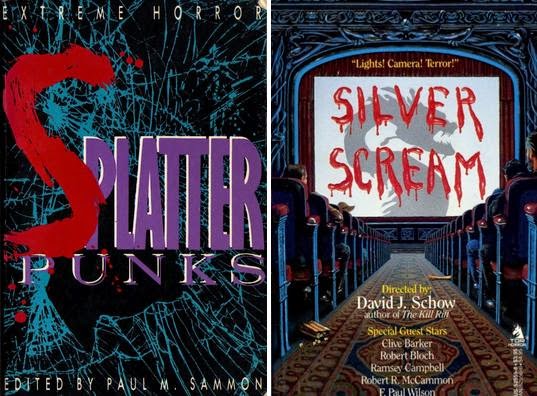
Is it ironic that "Graduation," which I'd read in Whispers, is probably Matheson's best work, and it was his first published? Written with strength and style and its only gimmick is the letter-writer's references to "you-know-who" and even on this second read I have no idea who that's supposed to be. Unreliable narrators can be great devices for horror but not when the reader has no way to grasp the truth. Still, I found it vivid and unsettling; "Graduation" has a precision that briefer works lack. Other standout works--the aforementioned "Vampire," "Mr. Right," "Red," "Dead End"--can be found in various anthologies. Editors chose wisely (Paul Sammon included the broiling, LA's burning, high-pressure radio-DJ nightmare "Hell" in Splatterpunks). I believe it was "Red" that got Matheson attention in the first place, and how could it not? It's about SPOILER a guy picking up parts of his daughter's mangled corpse off the road after he accidentally dragged her behind his car. Of course Matheson doesn't spell that out like I just did and while it's pretty shocking it kind of stretches the boundaries of belief. Would the police and EMTs even allow that?!

When you look at Matheson's TV-ography as a writer, it's prolific but the quality is actually rather dismal. Highlights include such well-loved but not terribly brilliant shows like "Three's Company," "Knight Rider," "The A-Team," and "The Incredible Hulk," as well as not so-well-loved and not terribly brilliant shows like "B.J. and the Bear" and "The Powers of Matthew Star." With that in mind, the horror stories make more sense: they're not changing the world, they're just entertaining you for 22 or 45 minutes or so. But they're entertaining you not because they've got a new vision; they're entertaining you because it's the familiar dressed up in unfamiliar garb. The only raison d'être is that twist, that surprise, so anything that would get in the way of that--character, dialogue, realism--is jettisoned. As I said, perhaps in the 1980s a writer could have gotten away with this--and obviously, he did!--but today, as a much more experienced reader and fan, I find Matheson's approach to horror fiction incredibly jejune.

I began to think of this collection as high-concept horror: ideas that seem intriguing at first but are little more than tiny gimmicks, not actual stories about real people and situations. His penchant for writing stories made up of one-word sentences is interesting at first, but when it's over you think, That's all? Despite the introductory encomiums from Stephen King and Dennis Etchison, I was very little impressed with Scars, and despite the Matheson family name, found it not very distinguishing at all.


Saturday, March 7, 2015

The Nightrunners by Joe R. Lansdale (1987): Head-On Collision Smashing in Your Guts

Everybody remembers their first Joe R. Lansdale story.

Mine was "Night They Missed the Horror Show," which I read in the 1990 anthology Splatterpunks in January 1991 (its first appearance was in 1988's Silver Scream but I must've missed it somehow). To say I was unprepared for this black-hearted tale of Texas high-school hellraisers who inadvertently stumble upon real-life horrors is an understatement. Like a sucker punch to a soft belly or a club to the base of the skull, "Horror Show" leaves you stunned, out of breath, a hurt growing inside you that you know won't be leaving any time soon. Hasn't left me this quarter-century later. I know Lansdale (b. 1951, Gladewater TX) would have it no other way. 

Funny thing was, I craved that feeling. Sought it out. So within a couple months I'd tracked down Lansdale's 1987 novel The Nightrunners (Dark Harvest hardcover 1987, paperback by Tor, March 1989). I recall coming home one afternoon from the bookstore I worked at with my brand-new copy, going into my room, locking the door and then reading it in one white-hot unputdownable session. That had never happened to me before; I usually savored my horror fiction over several late nights. But The Nightrunners wouldn't let go. Lansdale's skill in doling out suspense and the threat/promise of the horrible things to come was unbeatable, evident from the first. He even tells you flat-out, after quoting a newspaper article about victims of a "Rapist Ripper," that "no one knew there was a connection between the two savaged bodies and what was going to happen to Montgomery and Becky Jones." You know you got to keep reading after that! 

The Joneses are a young married couple, living in Galveston, Texas, whose lives are shattered when Becky, a teacher, is raped by young men who were once her students in high school. She is haunted by the event, months later, can't even bear her husband's Montgomery touch. The nightmares are horrific re-enactments, almost as if her rapists are living in her head. Monty is a pacifist professor and he can't deal with how ineffectual the crime makes him feel; it throws his entire life philosophy into doubt. A conscientious objector to the Vietnam war, he worries that it's cowardice, not conviction, that may be his main motivation. Becky is horrified rather than being relieved when Clyde Edson, the teenage scumbag sociopath who led the attack and the only one caught by police, hangs himself in his jail cell: she'd seen his death in a vision. Monty, with his "sociological thinking," and a therapist try to explain it away, a result of her trauma, but Becky knows something worse is waiting. Monty's plan? Take her away to their friends' isolated cabin in the woods. Surely, they'll be safe there!

 Kindle edition, 2011

Honorable, stand-up guy Clyde never named his accomplices, and so they're still out there, tooling around the night streets in a black '66 Chevy, eating up the lonesome Texas highways ("Its lights were gold scalpels ripping apart the delicate womb of night, pushing forward through the viscera and allowing it to heal tightly behind it"), looking for trouble, always first to draw when it shows up. Like a mini-Manson, Clyde drew the disaffected to him, into his poisonous orbit; a crew of violent losers with nothing to lose. His best bud Brian Blackwood, however, is different:  together the two of them fancy themselves Nietzschean "supermen" (or, as Blackwood writes in a journal, "It's sort of like this guy I read about once, this philospher whose name I can't remember, but who said something about becoming a Superman. Not the guy with the cape"), ready, willing, and able to topple civilized society and live by muscle and wit, appetite and anger. AKA rape and murder, of course. And revenge.

1987 Dark Harvest hardcover

Here's where things get strange: one night Brian dreams, dreams of a god shambling up a black alley "and somehow Brian knew the shape was a demon-god and the demon-god was called the God of the Razor." Lansdale shifts from his tale of gritty crime and violence into something surreal and grotesque. It is, in its way, absurdly beautiful.

...tall, with shattered starlight eyes and teeth like thirty-two polished, silver stickpins. He had on a top hat that winked of chrome razor blades molded into a bright hatband. His coat (and Brian was not sure how he knew this, but he did) was the skinned flesh of an ancient Aztec warrior... out of nowhere he popped out a chair made of human leg bones with a seat of woven ribs, hunks of flesh, hanks of hair, and he seated himself, crossed his legs and produced from thin air a dummy and put it on his knee... the face the wood-carved, ridiculously red-cheeked face of Clyde Edson. 

(You can see that the cover artists--Joanie Schwarz and Gary Smith--actually read the book! God how I love that Tor cover) Brian learns that Clyde is possessed by this God of the Razor, and now Clyde is going to inhabit Brian and together they're going to find Becky and, in Clyde's charming parlance, "cut the bitch's heart out." With the God of the Razor there to guide their hand. And if Brian fucks up, there's a razor to be ridden on the Dark Side... forever. Idiot minions in tow as well as a bored teenage couple looking for kicks, Brian/Clyde begin their night run, rumbling through the countryside in that black Chevy, laying waste to any and all who get in their way. No one will be spared.

Woeful cover art for Carrol & Graf 1995 reprint

I haven't mentioned the many characters that inhabit the novel, men and women living the hardscrabble Texas country life Lansdale knows so well, using humor and sex to ease pain and poverty. Some of the folks seem like stereotypes but Lansdale always invests a knowing detail into them. He doesn't belabor characterization, but he knows it hurts the reader more when he hurts characters we care about. The teenagers are irredeemable evil, yes, smart yet deluded or stupid and easily led. Monty continually questions his manhood; Becky struggles to contain her fears and begin a normal life again. Despite the depths of sexual violence that Lansdale plumbs here--and make no mistake, he plumbs deep, disturbingly, humiliatingly deep, and there are moments where you'll want to put the book down and try to shake out an image from your head that he's put there--there is always an element of humanity; he balances his cold steel razor fear with an understanding of people in extreme situations. We can survive, if we fight. And if we can get our hands on a frog gig, all the better.

2013 trade reprint, dig the '70s color scheme

Don't get me wrong: The Nightrunners is not a noble book; it is mean, it is nasty, it is ugly as hell in places and it doesn't flinch, ever. It's also vulgar and crude and clumsy--the less said about a flashback to Monty and Becky's "meet cute" scene the better--obviously the work of a writer not yet in command of his craft. But beneath its exploitative surface beats an energetic heart. In cinematic terms, the novel is kind of a hodge-podge of '70s and '80s horror, thriller, and crime entertainment. Peckinpah's Straw Dogs is the obvious inspiration, I think, but one can also sense young Wes Craven and Sam Raimi nodding approval, while the Coen Brothers hang around in the background. Richard Stark and Elmore Leonard peek in every once in a while too. Going back to the '60s you can sense an AIP "wild youth" vibe when Lansdale describes that rumbling black Chevy and the teenage troublemakers inside.

1992 French edition: Children of the Razor!

Lansdale likes his humor icy black, Texas-corny, and in the direst of situations. While not as effortless as it would be in later novels, his bleak sarcasm and smart-ass attitude is threaded throughout Nightrunners. Doesn't always work; this attitude can seem callous, particularly in the humor the teens find in hurting people. Some readers might find this a turn-off. Still, it's what distinguishes him from a couple other extreme writers of horror from the same era, Jack Ketchum and Richard Laymon. He's not as dour as the former or as dreary as the latter. He's unclassifiable. Joe R. Lansdale is his ownself, as he's always said, and I believe him. You will too. 

In the years since this early novel, Lansdale has become more and more prolific (and even better at this writing thing), moving out of the cult ghetto, winning major awards (2000's The Bottoms took the Best Novel Edgar Award) and having film adaptations made (2002's Bubba Ho-Tep and 2014's indie crime flick Cold in July, based on his 1989 book). His personal Facebook page is filled with his terrific and honest advice about writing and the writing life. I've read quite a few of his '80s and early '90s novels and stories (try The Drive-In from '88, the short story collection By Bizarre Hands from '89, or Mucho Mojo from '94) and enjoyed them, but it is The Nightrunners that has stayed with me best: it is pulp '80s horror fiction at its rawest, nastiest, most unforgiving, most relentless. Behold the God of the Razor... but don't say I didn't warn you.


This post originally appeared on Tor.com in slightly altered form.