Showing posts with label occult horror. Show all posts

Wednesday, June 8, 2022

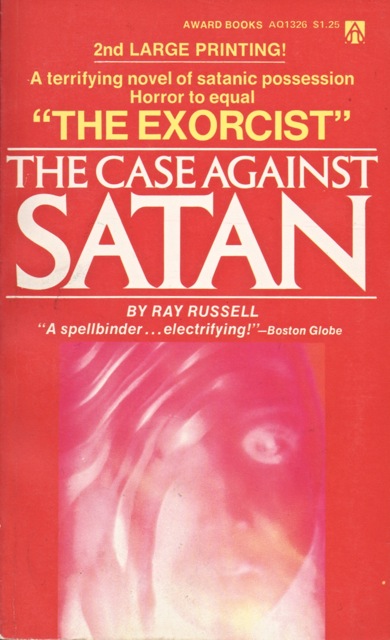
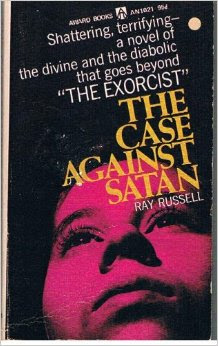
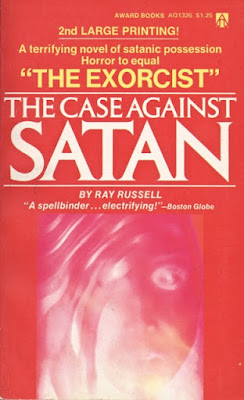
The Case Against Satan by Ray Russell (1962): Hell is for Children

There was a rattling, gagging sound from the girl, and they turned to watch in pity and loathing as she retched violently, her body curling in spasms, her fingers and toes clenched, her gaping mouth spewing jet after jet of reeking substance that covered her and splattered the wall and ran sluggishly in long viscous tendrils down to the floor.
 
A young teenage girl in unbearable torment of unknown origin. Her beleaguered parent. Two priests with competing ideas about their belief in God and Satan. A harrowing test of wills against a force the modern world has forgotten...
 
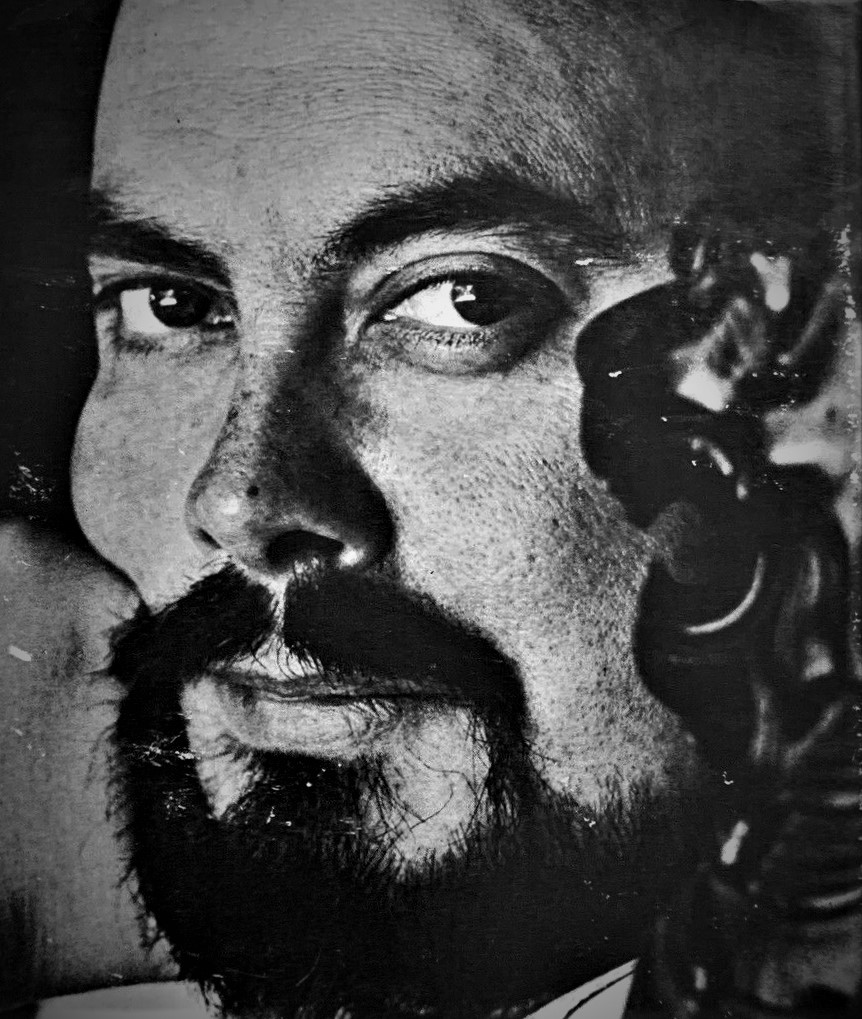
Modern horror would be a poorer thing were it not for the book and film The Exorcist—that's not an overstatement. William Peter Blatty's thrilling, chilling tale of innocence soiled and faith tested, of doubt, guilt, and ultimately of sacrifice, has touched the popular horror imagination at that same primal archetypal level as Dracula and Frankenstein. But as it was with those two monstrous icons, The Exorcist also had its own forgotten precursor. I'm talking about the 1962 novel The Case Against Satan, by the late great Ray Russell (1924-1999, seen below in an undated photo, but probably late Sixties or so).

You may recall I've written positive reviews of several of Russell's works over the years, I'm absolutely a fan, happy to see all his horror Gothics back in print today. His adeptness at combining a dark, literate sophistication with "distasteful" genre elements, which might seem beneath his skill set, is admirable. Grand Guignol bloodiness in works like "Sardonicus" and Incubus is polished by his steady pen in prose both accessible and lively, often delivered with an ironic tone, a devilish wink. As editor for Playboy magazine in its early days, he no doubt sharpened that pen and that penchant for macabre philosophy when working with writers like Ray Bradbury, Charles Beaumont, Kurt Vonnegut, and others of that sensibility.
 
Russell's dialectic in his genre fiction, and first seen in this novel, is one of superstition versus rationality, of tradition versus modernity, of enlightenment versus religion, as one reviewer of Case Against Satan notes. Indeed, this kind of against-the-grain approach was also part and parcel of the Playboy "philosophy," if you will: unshackling our minds (and bodies!) from the strictures of the past, strictures too often rooted in myth and superstition (i.e., religion). From such conflict does Russell approach demonic possession in the modern world. And no surprise that sex is suspected at the root of the "possessed" girl's problem: repressed sex, of course, a great raw force that seethed and snarled for release.
 
As tête-à-têtes go, here Russell is in the "both sides" camp, a final answer which Russell leaves open-ended. The first chapter is titled "The Two Sides of Midnight"—indeed, all the chapter titles seem to predict black metal songs!—and that gets right at Russell's views about the difficulty we have perceiving even what we see right in front of us. "The Hand of God is quicker than the eye," as one character quotes.
 
Russell combs through history and literature to find some delicious, torturous horrors, as is his wont, easy enough to do with the Catholic Church. Intellectual talk between the two conflicting priests, Father Halloran and Father Sargent, when they're not actually exorcising poor young Susan Garth is stimulating; the cranky teetotaling anti-Catholic John Talbot was a hoot, with his scandalous insight that the Church and communism are opposed to one another solely because they are both totalitarian... Total power, total control. Control over everything—over the body, over the mind.
 
Compact and tightly-wound at around 150 pages, Case is deceptively simple, but still dramatic and lurid at times; like The Exorcist it is not necessarily a novel of horror but one about belief, doubt, conviction, redemption, but are these antiquated ideas in the 20th century? The concept of God and Diabolous struggling for the human soul is accepted only if it is translated into Freudian jargon—the superego and the id struggling for human reason.
 
I can’t say for sure but it seems like, for all the similarities, that Blatty took Russell's book and blew it up to bestselling mass-appeal status. Case does not have the scorching vulgarisms, the relentless throb, that all-hell-breaks-loose energy that kept millions upon millions of Exorcist readers turning pages and unable to sleep. Its dry-as-dust title perhaps an inkling to what's inside, Case didn't wow me like Russell's other works; he always has his characters talk a lot but the theological discourses here can wear on the reader. 

Yet the author's intelligence, subtlety, and psychological astuteness can make up for some of the drier sections, as he uses a sensational topic to illuminate the darker regions of the human mind. Ray Russell is the kind of just-maybe-smarter-than you pal you enjoy talking with over a bottle of good booze late into the darkening night... but just maybe you've heard this particular story before.

But have any of you ever heard and wondered at strange sounds in Catholic rectories? In the Unholy Hours, past the witching time of night, have you ever heard sounds that seem like the screams of poor girls in mortal agony? Have you ignored them? How long will your conscience let you ignore them?

Saturday, April 2, 2022

Where Nightmares Are: Peter Haining Born This Date, 1940

 
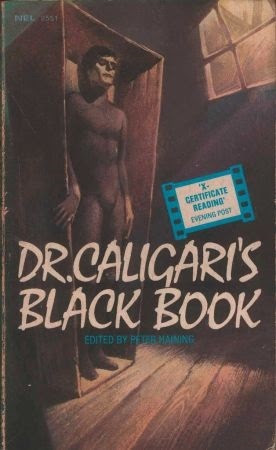
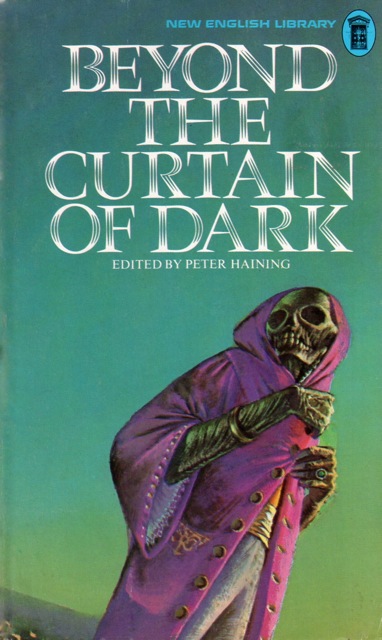
Anthologist and horror historian Peter Haining was born on April 2, 1940, in Middlesex, England. His books number into the hundreds, and his anthologies boast some of the most bizarre art of the late Sixties and Seventies, often by recognizable genre artists such as Bruce Pennington and John Holmes. Favoring "the subtle and the classic over the shocking and the graphic," he collected tales not often found in other horror anthologies and sought to broaden the scope and appeal supernatural fiction. Other books were about fictional British icons like Sherlock Holmes, Hercule Poirot, Dr. Who, and James Bond. Prolific almost beyond measure, he produced works into the 21st century, and died unexpectedly of a heart attack in 2007. See more covers here.

Wednesday, February 24, 2021

A Month of Black Sabbaths: The Horror Paperbacks of Daniel Rhodes

Not much to catch the eye in this classy cover art for Next, After Lucifer (July 1988), but the critical blurbs seem to be impressed! One of those authors about whom I never knew anything but whose paperbacks have been plentiful in used bookstores for years, Daniel Rhodes had two more titles published in the late Eighties through Tor's prolific horror line, Adversary and Kiss of Death, from 1989 and 1990 respectively. In the United Kingdom they were put out by New English Library—adorned with much better cover art—complete with Graham Masterton singing the praises.
 
Looking into the author, turns out Rhodes is a pen name of thriller author Neil McMahon, who is still hard at work today. I was pleasantly surprised to find Next, After Lucifer to be written in a style not usually found in horror paperbacks, elevated and inspired by the stories of M.R. James—the novel is dedicated to the writer—but with requisite updating (drug use, illicit sex). Actually, it was published in hardcover by St. Martin's Press, which might explain the higher quality prose and all-around cultured nature of the tale within.
 
Anyway, there's an ancient evil in a quaint French town where American medieval studies scholar John McTell and his indifferent newlywed wife Linden are taking a sabbatical. It's Templar Knight Guilhem de Courdeval from the 14th century, burned at the stake for sorcery and various occult antics, whose spirit is trying to invade McTell, thanks to McTell stumbling across the knight's grimoire in castle ruins in the hills. Come on, dude, you're a medieval studies prof, you know waaay better than to mess with that stuff.

Rhodes is a literate and careful writer, and I was impressed by the depiction of local color, an indulgent priest, the villagers, and especially the snobby, drunken antics of Linden's sister, husband, and a Eurotrash hanger-on who crash the McTells' getaway and liven up the proceedings. It's quiet, allusive, historical horror here all the way, which was fine, a couple gory touches, but I definitely felt it lacked a certain je ne sais quoi, or maybe I just mean it needed more oomph in narrative, dramatic tension. Plus there's a sequel I didn't know about, Adversary, so that means the climax is a touch half-hearted. Worth a read, worth adding to your collection, but remember to watch out for grimoires that write themselves...
 

Thursday, November 19, 2020

Where Satan Dwells: The Kitty Telefair Gothic Series by Florence Stevenson (1971-1977)

If you've been following Too Much Horror Fiction or have read Paperbacks from Hell, you're likely aware of the scarcity of some of the titles talked about and the oft-times inflated prices online booksellers afix to those books. These disposable artifacts from a bygone age often are going for $75 to $100, and even more in some cases. To be blunt, it sucks. Mea culpa, and all that. Certainly collectors of all stripes run into this issue.
 
I also want to say that these inflated prices in no way reflect the "literary" quality of those books. Like, at all. The cost only reflects the scarcity and a near-mint condition (at least one hopes). Any good collector must be well aware of this, and proceed accordingly when opening the wallet. Don't expect that dropping 50 bucks on a rare book will get you the reading experience of a lifetime... alas.

 
Which brings me to these Florence Stevenson (1922-1991) Gothic paperbacks, the virtually impossible to find Kitty Telefair series. According to the much-missed blogger Curt Purcell, this occult series features terrific vintage Sixties and Seventies flavor while engaging in classic horror tropes like vampires, sorcerers, and past lives. Rare and good? Mmm-boy, sounds delicious!

According to Purcell, Kitty herself is a kind of psychic Nancy Drew, but what I really dig about these books is, of course, the cover art (all uncredited except Horror from the Tombs, by a George Bush). Candles, castles, bats, spooky windows, flowing gowns, widened eyes, sexy Seventies women, mustachioed mystery men, blurbs about The Exorcist: all the Gothic accoutrements one could ask for.

Also impossible to find is any info on Ms. Stevenson herself, which kinda drives me crazy. A few of these titles turn up very occasionally on Abebooks if you have a sharp eye and email alerts—same goes for many of her other Seventies Gothics; I myself only own two of her Eighties horror titles—but these are the kinds of paperbacks for which you must haunt thrift stores, garage sales, and junk heaps, cursed for eternity.

Sunday, February 16, 2020

The Sweet Taste of Burning by Paul Andreota (1972): Witchery Weakening

Slim oh-so-Seventies French novel detailing the life and loves of, well, French sophisticates who get mixed up with the supernatural. Savor The Sweet Taste of Burning (Le Piège in French, "The Trap"; this edition from Warner Books, Sept 1974), a mild romantic thriller with witchy undertones. Journo Serge heads to the countryside to investigate occult goings-on and regular old murder at the behest of his scandal-hungry editor—the Golden Age of peasant witchcraft, old boy! There Serge goes looking for the local healer/shaman, Bonafous, but he first meets the man's niece, Teresa, and quelle surprise things slowly start to ooh là là. Cue middle-age crisis for Serge!

Then Serge's wife gets sick, and it's the same type of sickness that had plagued some now-dead folks in the country town where Bonafous and Teresa live, the reason Serge went there in the first place. Could Teresa, in a fit of jealousy and cold hate, cast a spell on her? In this day and age? Unbelievable for modern, sophisticated people to entertain. Carry on like this and you'll soon go completely mad yourself...

Our author, Paul Andreota (1917-2007), wrote novels of suspense and witchcraft, sez the paperback's bio page, as well as screenplays for French films I've never heard of (decidedly not the arty Truffaut/Godard type) ranging from the 1950s to the 1970s. Looks like he enjoyed himself, seems a regular bon vivant type here:

 Author Andreota
The book reads easily enough, if it's the sort of thing you like, but any comparison to contemporaneous works like The Exorcist or Rosemary's Baby is wildly overstating the case. Much of it reads like an obsessive hard-boiled novel of fatalistic love but with that tinge of the otherworldly, especially the final pages. But it's too little too late.

Although I was intrigued by the idea of a French occult novel, the main reason I bought Sweet Taste was for that sweet cover. Artist Charles Sovek, best known for his work on the early Seventies series Satan Sleuth published by Warner Books (and prominently featured in Paperbacks from Hell!), has a moody model evoking just the right amount of come-hither crazy ("Sometimes at night I'm two people," she tells Serge at one point). Not a terrible book overall, nothing I'd recommend, but you could—and probably do—have books with worse covers in your collection.

Thursday, November 14, 2019

To the Devil's Ballet: The Cover Art of Robert Heindel

These pale, haunting, geometric sketches for very late Sixties and very early Seventies occult paperbacks from Signet Books are a refreshing palate-cleanser for when the lurid and tacky covers one usually sees becomes overwhelming. Whispers work wonders here, thanks to the delicate, intimate style of illustrator Robert Heindel (1938-2005), an artist I only learned of after spying his signature "R. Heindel" on a recently purchased copy of the 1970 edition of The Mephisto Waltz.

The doll's head in a circle, carefully drawn hands at the piano, and eyes closed in repose reminded me of a favorite cover for a book I have been unable to find cheaply, the intriguingly titled A Feast of Eggshells. Somewhere in my searches I discovered another similar cover and noted that signature, then began to track down more by Heindel. Which is how I discovered that he's a world-famous painter of ballet and other dance, whose artwork has been collected by Princess Diana, Andrew Lloyd Weber, and George Lucas! Claaaaasssy for a guy whose earliest works appeared on these "easy-to-see large-type" Gothic/occult paperback originals. I love it!

  
I found five other horror covers from Heindel: Neither the Sea nor the Sand, Suffer a Witch, Along Came a Spider, The Ouija Board, and The Devil Boy. Personally, I think these are simply wonderful, as they feature all the signifiers of genre works of the era: creepy kids, eerie witches, haunted houses, Rosemary's Baby. If anyone knows of other covers he did like this, please let me know...
 
 
More interesting is that I've been seeing his work on more famous paperbacks for decades and didn't even realize it: his most well-known cover illustrations are for Signet's series of Ayn Rand reprints. Crazy, right? You can even buy the originals of these here.


Wednesday, October 30, 2019

False Idols by Betty Ferm (1974): A Demon Needs a Maid

Remember that scene in 1979's Love at First Bite in which Richard Benjamin, the Van Helsing character, attempts to thwart George Hamilton's Dracula by pulling a crucifix from his pocket—but mistakenly takes out a Star of David? When I saw the movie as a kid I didn't get the joke, but it's a good one. Jewish-themed horror is, alas, the tiniest of subgenres in vintage horror fiction, and it can be done well (or, like anything else, not well), but I don't think it's been done enough. This explains why I was intrigued by this back cover copy hinting at a Jewish, rather than a typical Christian, origin for the otherworldly horrors and chilling premonitions promised here. Alas, there's not much going on, Jewish or otherwise, in False Idols (Fawcett Crest paperback, June 1975), a 1974 supernatural thriller that fails to thrill or do anything much at all. False is right.

Everything is leftover Levin and Blatty: the dash of social concern, a whiff of current mores, but nothing goes deep. Familiar elements are all-too-smoothly cobbled together from those better works, from Dark Shadows, soaps, TV movies, commercials, et al. (Similar contemporaneous novels by Ramona Stewart and Barbara Michaels are smarter and spookier too). The upper middle-class setting is bland and rote, and no ethnic flavor is to be found to give the novel its own identity. Our tale goes from bad to worse as soon as Fran, our beleaguered protag, leaves the home to return to the work she left behind once married, and it's the South American maids with their "almond eyes" and "faint musky scent" who cause all the demonic trouble. It's hard to get good help these days!

Mezuzahs replace crosses and the terrified old mother-in-laws shrieks about the Dybbuk, some Jewish grieving practices are only slotted in, that's all, surface details only. The possessive demon hails from Mesoamerican Incan mythology: Taguapica by name, and boy does he have it in for the Old Testament God: "Look around you, Yahweh. Your world is dead as you are dead to the world. It is Taguapica who will reign now" he bellows in the overheated climax. It's the kind of comparative religions scenario Graham Masterton would crank up to 11 in just a few short years. Maybe the novel had some effect for readers in its era as a decent enough time-waster, but nearly half a century later False Idols is simply a dull, unremarkable artifact from a bygone age.
 
Putnam hardcover, 1974

Psychiatrist Livvy Webber—the kind of smart, helpful, good-hearted character you just know is toast sooner or later—actually says at one point early in the novel that "Each time a Rosemary's Baby or an Exorcist hits the market I can be guaranteed a number of new patients who lay claim to related phenomena as the cause for the fouled-up lives." More of this contemporary self-awareness would have given a fresh coat of paint to our tired tale, which lasts a scant 174 pages. The ending is not an ending, it's all still going on, you know how it goes.

Speaking of coats of paint, at least the paperback offers up eerie cover art thanks to the masterful George Ziel, although the lusty, brazen, confident lady in red never—sadly—makes an appearance.
Author Betty Ferm (1926-2019) wrote nearly a dozen novels in various popular genres (see some below) and taught college courses in writing suspense novels.