Showing posts with label william peter blatty. Show all posts

Wednesday, June 8, 2022

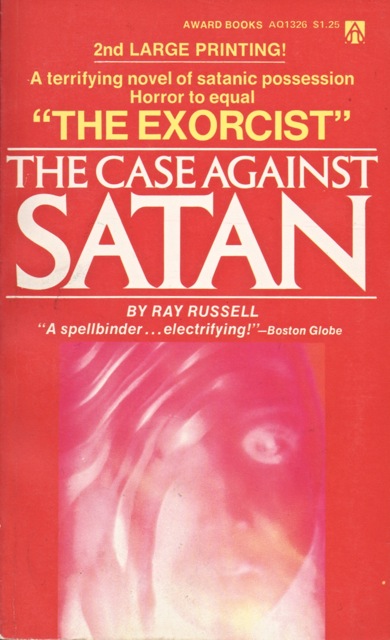
The Case Against Satan by Ray Russell (1962): Hell is for Children

There was a rattling, gagging sound from the girl, and they turned to watch in pity and loathing as she retched violently, her body curling in spasms, her fingers and toes clenched, her gaping mouth spewing jet after jet of reeking substance that covered her and splattered the wall and ran sluggishly in long viscous tendrils down to the floor.
 
A young teenage girl in unbearable torment of unknown origin. Her beleaguered parent. Two priests with competing ideas about their belief in God and Satan. A harrowing test of wills against a force the modern world has forgotten...
 
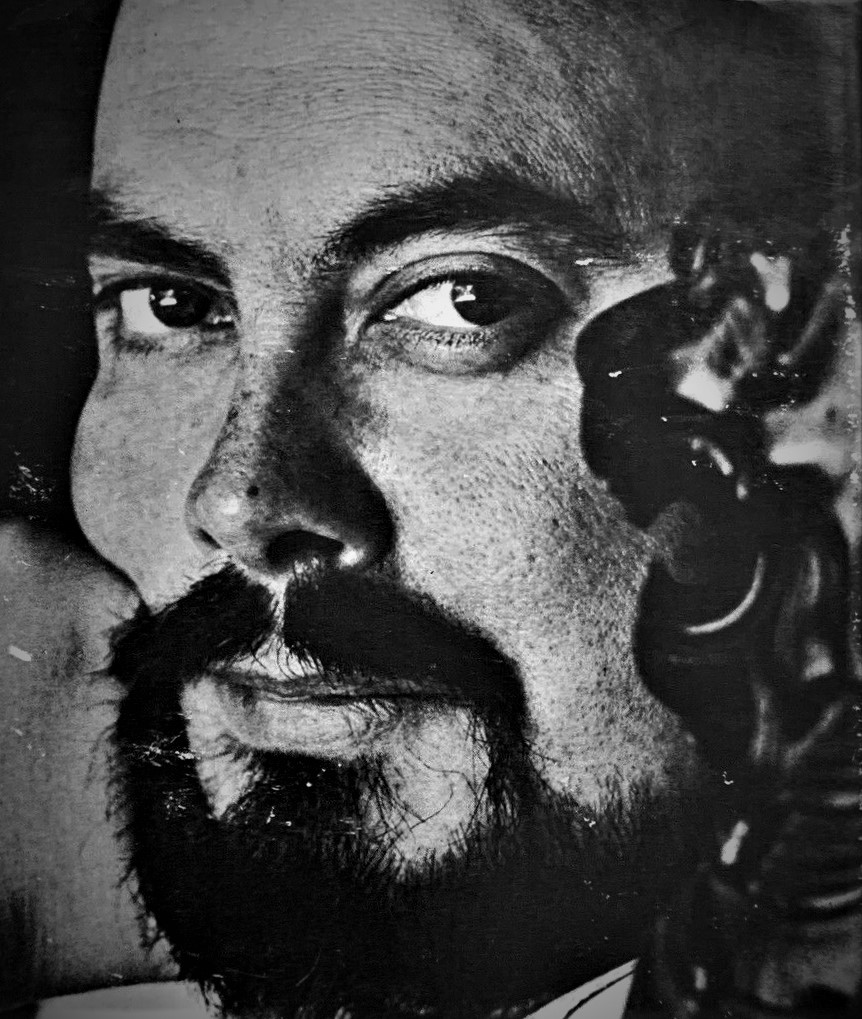
Modern horror would be a poorer thing were it not for the book and film The Exorcist—that's not an overstatement. William Peter Blatty's thrilling, chilling tale of innocence soiled and faith tested, of doubt, guilt, and ultimately of sacrifice, has touched the popular horror imagination at that same primal archetypal level as Dracula and Frankenstein. But as it was with those two monstrous icons, The Exorcist also had its own forgotten precursor. I'm talking about the 1962 novel The Case Against Satan, by the late great Ray Russell (1924-1999, seen below in an undated photo, but probably late Sixties or so).

You may recall I've written positive reviews of several of Russell's works over the years, I'm absolutely a fan, happy to see all his horror Gothics back in print today. His adeptness at combining a dark, literate sophistication with "distasteful" genre elements, which might seem beneath his skill set, is admirable. Grand Guignol bloodiness in works like "Sardonicus" and Incubus is polished by his steady pen in prose both accessible and lively, often delivered with an ironic tone, a devilish wink. As editor for Playboy magazine in its early days, he no doubt sharpened that pen and that penchant for macabre philosophy when working with writers like Ray Bradbury, Charles Beaumont, Kurt Vonnegut, and others of that sensibility.

 
Russell's dialectic in his genre fiction, and first seen in this novel, is one of superstition versus rationality, of tradition versus modernity, of enlightenment versus religion, as one reviewer of Case Against Satan notes. Indeed, this kind of against-the-grain approach was also part and parcel of the Playboy "philosophy," if you will: unshackling our minds (and bodies!) from the strictures of the past, strictures too often rooted in myth and superstition (i.e., religion). From such conflict does Russell approach demonic possession in the modern world. And no surprise that sex is suspected at the root of the "possessed" girl's problem: repressed sex, of course, a great raw force that seethed and snarled for release.

 
As tête-à-têtes go, here Russell is in the "both sides" camp, a final answer which Russell leaves open-ended. The first chapter is titled "The Two Sides of Midnight"—indeed, all the chapter titles seem to predict black metal songs!—and that gets right at Russell's views about the difficulty we have perceiving even what we see right in front of us. "The Hand of God is quicker than the eye," as one character quotes.
 
Russell combs through history and literature to find some delicious, torturous horrors, as is his wont, easy enough to do with the Catholic Church. Intellectual talk between the two conflicting priests, Father Halloran and Father Sargent, when they're not actually exorcising poor young Susan Garth is stimulating; the cranky teetotaling anti-Catholic John Talbot was a hoot, with his scandalous insight that the Church and communism are opposed to one another solely because they are both totalitarian... Total power, total control. Control over everything—over the body, over the mind.
 
Compact and tightly-wound at around 150 pages, Case is deceptively simple, but still dramatic and lurid at times; like The Exorcist it is not necessarily a novel of horror but one about belief, doubt, conviction, redemption, but are these antiquated ideas in the 20th century? The concept of God and Diabolous struggling for the human soul is accepted only if it is translated into Freudian jargon—the superego and the id struggling for human reason.
 
I can’t say for sure but it seems like, for all the similarities, that Blatty took Russell's book and blew it up to bestselling mass-appeal status. Case does not have the scorching vulgarisms, the relentless throb, that all-hell-breaks-loose energy that kept millions upon millions of Exorcist readers turning pages and unable to sleep. Its dry-as-dust title perhaps an inkling to what's inside, Case didn't wow me like Russell's other works; he always has his characters talk a lot but the theological discourses here can wear on the reader. 

Yet the author's intelligence, subtlety, and psychological astuteness can make up for some of the drier sections, as he uses a sensational topic to illuminate the darker regions of the human mind. Ray Russell is the kind of just-maybe-smarter-than you pal you enjoy talking with over a bottle of good booze late into the darkening night... but just maybe you've heard this particular story before.

But have any of you ever heard and wondered at strange sounds in Catholic rectories? In the Unholy Hours, past the witching time of night, have you ever heard sounds that seem like the screams of poor girls in mortal agony? Have you ignored them? How long will your conscience let you ignore them?

Friday, January 13, 2017

RIP William Peter Blatty (1928 - 2017)

Exorcist scribe William Peter Blatty has died, less than a week after his 89th birthday. If you've only seen the movie, do yourself a favor and read the novel too. It's truly astounding and deserves its legendary status.


Saturday, December 31, 2011

This List Goes to 11: Best Vintage Horror Reads of the Year

The best, and/or my favorite, horror reads of the year. List is random because I'm so lazy.

The Silence of the Lambs
, Thomas Harris (1988) - A pinnacle of pop success that is also a damn great novel. Don't avoid it, as I did, because of the iconic nature of the movie adaptation.

The Exorcist, William Peter Blatty (1972) - Ditto. It's kinda like if Dostoevsky's novel Possession (aka Demons) were about, well, literally that.

The Amulet, Michael McDowell (1979) - Paperback original that transcends its origins. The grim South and a series of strange murders. Find a copy.

Son of the Endless Night, John Farris (1984) - Large-scale horror with heft that doesn't stint on the quality of writing nor on the blood and gore.

The Shining, Stephen King (1977) - Third read's the charm.

Anno Dracula, Kim Newman (1992) - A must-read for Dracula fans, a delightful mash-up of history and horror. One of the most enthralling books I've read in years.

The Girl Next Door, Jack Ketchum (1989) - What you've heard about it is true. What you haven't heard about it is that it's got a soul, and that makes all the difference.

Incubus, Ray Russell (1976) - Wish more vintage novels were this outrageously tasteless and fun to read. Gruesomely sexual and terribly sexist... or sexy. I can't decide which.

The October Country
, Ray Bradbury (1955) - A must-read horror classic. Why I didn't read this 20-odd years ago I have no idea.

Echoes from the Macabre, Daphne du Maurier (1978) - Merciless stories of the random fates of men and women. The way she wields a pen is murder.

The Dark Country, Dennis Etchison (1982) - Jim Morrison once described the Doors' music as feeling "like someone not quite at home." Etchison's stories are the same... and he's not afraid to aptly quote Mr. Morrison once in a while either.

Other good stuff: Clive Barker's In the Flesh and The Inhuman Condition; the anthologies Cutting Edge and Shadows; The Tenant by Roland Topor; and Peter Straub's Ghost Story. I hope to get to review/collect some Machen, Blackwood, Crawford, and other classic writers in 2012... see you guys then.

Tuesday, April 12, 2011

The Exorcist by William Peter Blatty (1971): Begat Your Cunting Daughters

From the cab stepped an old man. Black raincoat and hat and a battered valise. He paid the driver, then turned and stood motionless, staring at the house... standing under streetlight glow, in mist, like a melancholy traveler frozen in time.

The preeminent 1970s bestselling horror novel. Millions of copies adorning nightstands and coffee tables everywhere. The unfocused cover photograph of a young girl in torment. The exotic, sibilant title--exorcist--why, the word itself sounded evil. If you were of an impressionable age at the time, surely the iconic imagery of the book alone made a nightmarish impact, even if you didn't read it. Perhaps even more so, because I'm not even sure The Exorcist, the fifth novel from William Peter Blatty, is a horror novel. I know, I know, that old argument: what makes horror fiction, well, horror? The Exorcist has some of the most infamous moments of shock and terror in popular culture, but is horrifying readers its sole raison d'être? I'd argue non.

Vastly influential in the genre, as paperback horror shelves started filling up with books adorned with endless possessed little girls in frilly smocks and Mary Janes, The Exorcist helped make satanism and the occult everyday notions. With relish fans ate up stories of innocent young women defiled, but in the end, saved. But the book bears little relation to literary horror before it. Somehow I don't see Blatty tucked up in bed with a worn volume of Poe or Lovecraft or Machen or the like. His forebear really seems to me to be Dostoevsky, or at least Crime and Punishment. Take Lieutenant Kinderman, the movie-loving detective. The way he tries to disarm, misdirect, and placate in his questioning to get to the truth reminded me, if I recall correctly, of Petrovich, the detective from Dostoevsky's classic. And without a doubt, Blatty's concerns bear similarity to old Fyodor's lofty theological notions of guilt, forgiveness, love, etc.

But no matter how lofty Blatty's intentions, he hasn't written a tract or a treatise; no, you just cannot stop reading; this fucker moves. At times it's thoughtful; other times it's brooding; still others, cranked up and hitting on all cylinders, smooth, confident, powerful. What struck me first was how Blatty tells his story like a journalist. The early scenes with Hollywood actress Chris MacNeil, renting a home in the DC neighborhood Georgetown while she shoots a movie, and her 12-year-old daughter Regan seem like a setup for a nonfiction piece. The slow build is pretty outstanding: the noises in the attic, Regan's casual mentioning of Captain Howdy or of her bed jumping around, a mysterious book on witchcraft that appears and disappears. The word exorcism isn't even mentioned till exactly the halfway point.

Yes, The Exorcist is much better written than I'd expected; compared to other bestsellers of the era that became movies, such as Jaws or The Godfather, it's positively a literary masterpiece. Blatty lays down a bedrock reality with a professional's writer's conviction and authority, which sells the outrageous tale; he's a storyteller who knows that in order to buy the impossible, the possible must be undeniable. He wisely makes much of the psychological/neurological explanations for Regan's ghastly and inexplicable behavior... until that becomes untenable. Denying Regan has become possessed is more ludicrous than thinking she simply has a physiological disorder; now the rational answers from doctors and psychologists sound like mumbo-jumbo: split personality, psychosomatic, epilepsy, autosuggestion, temporal lobe, neurasthenia, electroencephalograph, clonic contractions...
Then there's the famous prologue, with old (unnamed) Father Merrin on an archaeological dig in Iraq, which seems to imply, upon later reflection, that Regan's possession is incidental; Merrin and the demon Pazuzu have been on a collision course for who knows how long: Abruptly he sagged. He knew. It was coming... But darkly-natured Father Damien Karras has his own battle: his overarching guilty conscience about being unable, as a priest with a vow of poverty, to provide a comfortable living for his ailing mother. His childhood was grim, hand-to-mouth: He remembered evictions: humiliations: walking home with a seventh-grade sweetheart and encountering his mother as she hopefully rummaged through a garbage can on the corner. That's one of the most vivid descriptions of shame I've ever read.
Blatty on the set of The Exorcist, c. 1972

Ultimately, The Exorcist isn't about the nature of evil, it's not about violence and its legacy, it's not out to chill us with intimations of our own mortality, as all good horror fiction should; it's about the corrosive power of guilt and the redemptive qualities of love, wrapped up in an irresistibly glistening package of vomit, bile, foulness, and blood. It's an essential read, but whether all that makes it a horror novel or not is between, well, you and you.