Showing posts with label jove books. Show all posts

Wednesday, February 14, 2024

Wet Work by Philip Nutman (1993): Too Tough to Die

In 1993, in my early 20s, I was working in a giant chain bookstore known as BookStar in Cary, NC. It was basically a Barnes and Noble (who eventually bought, rearranged, and then closed down the store), guys had to wear ties and dress pants, like it was fucking church. Several of my coworkers were horror fiction fans, both of the modern and classic variety, and we wasted many a working hour talking about the genre while ignoring our shelving duties. At this time the horror mass-market paperback boom was beginning its downhill swing, although I well recall the publication of many a serious title around then: Animals by John Skipp & Craig Spector, Lost Souls by Poppy Z. Brite, After Age by Yvonne Navarro, Skin by Kathe Koja, Grimscribe by Thomas Ligotti, The Golden by Lucius Shepard, as well as the continuing, final titles from the Dell/Abyss line. And in June came Wet Work, published by Jove Books, the first novel from young British author and journalist Philip Nutman.

I already knew the author's name from various Fangoria articles as well as a few of his short stories. They were good, smart, effective, and I remember shelving fresh new copies of Wet Work and thinking it might be worth a read. The critical blurbs came not from, you know, the newspaper reviewers but from fellow horror scribes like Clive Barker, Kathe Koja, Douglas E. WinterNancy A. Collins, Skipp n' Spector themselves, and Stephen King as well (although we've  learned how unreliable a King quote can be). All a good sign to me!


And yet—I didn't read it. My taste for the genre was waning some; sure, I was rereading some favorites but not really keeping up any longer. Like I said, I could tell the boom was slowing down, despite some interesting works arriving. This was when I was getting into my hardboiled/crime/noir phase, James Ellroy, Jim Thompson, Woolrich, Cain, Chandler, James Lee Burke. Tastes change, you gotta go where your heart leads you.

So when I finally got around to Wet Work last week, I wasn't sure if it was gonna read like a last gasp or a fresh breath. Turns out, it was neither, and it didn't need to be: it's simply a briskly-told horror novel of a zombie apocalypse. Ignore the "epic terror" comparison to The Stand on the cover; compared to King's mammoth-sized tome, Wet Work is a wee little rodent, scurrying about busily while getting the job done in a fraction of the pages.

It's radiation from a comet that sets things off, akin to the space probe origins of the zombies in the original Night of the Living Dead. Sections of the first half resemble the early parts of the 1978 Dawn of the Dead, although these characters don't know yet that they're dealing with the undead. All this is no ripoff or plagiarism, however: Wet Work is an expansion of a Nutman short story of the same name, and it was first published in 1989 in the essential undead anthology Book of the Dead, borne upon us by Skipp n' Spector. A major work of the splatterpunk movement, it featured stories all written in the ghoulish universe of Romero's (then-) trilogy of zombie horror movie classicks.

2005 reprint by Overlook Connection Press

Any consumer of popular entertainment, horror or not, will be right at home in the familiar environs of Nutman's various characters and settings: secret military assassins, rookie cops, seasoned cynical cops, adults with dying parents, the lovelorn, the alcoholic, the teenage dirtbag, the cheating rich, the drug dealer, the junkie, DC/NYC, the airport, the strip club, the lab, the White House. Nothing to criticize, really; Nutman fills in color and detail no matter where he's describing. It's all as immediate as any movie or TV show, slick but not shallow, but not overladen with heavy meaning or a desire to upend tradition. His prose is lean, cynical, our tale starting off with the whitehotwhiteheat italics and ...ellipses... so beloved of the splatterpunks, what better way to get to the meat of the matter?

Skipping in well-played rhythms, Nutman shuffles his plotlines well, not lingering too long on any one locale. This is a skill I wish more horror writers had mastered: the thrust of narrative, the propulsion of story, the ability to convey movement in time forward while invoking a sense of impending doom overall. Nutman's background as a film historian has to account for his crisp, capable hand at this task, as the novel is cinematic as hell. Horror violence and gunplay action mingle here expertly.

Nutman didn't write another novel, I'm not sure why and couldn't find out, but did write comic books and more short stories, collected in 2010's Cities of Night. He died just over 10 years ago; it's a little sad to see all these encomiums from his colleagues praising his talents and to know he wouldn't add to his bibliography. Maybe with the end of the paperback era he just couldn't get another publisher interested in a full-length horror novel? I also feel bummed because in spring 1994 I attended a comic book convention in Durham with a coworker pal, and saw Nutman himself engaged in a lively conversation with one of the movie memorabilia sellers, and I thought, hey, you should go chat with him, tell him you liked his stories... but I did not! Damn.

Overall Wet Work is a short sharp shock of splat fiction, never dwelling too long on any character(s), moving at a brisk pace as the end of the world approaches. Not that the story is shallow or insipid, it's just that Nutman knows that we know how the story goes, and isn't trying to reinvent the wheel. His fresh take on zombie myth isn't exactly mind-blowing, but it is interesting enough to keep even a seasoned horror fic fan reading to the bleak, downbeat ending. Who'd want it any other way?

Thursday, August 11, 2016

Just a Kiss Away

Very early '90s sex-ay vampire stuff, post Rice, never read any, dig the covers, kinda cool.


Thursday, February 25, 2016

Pick a Name, Any Name

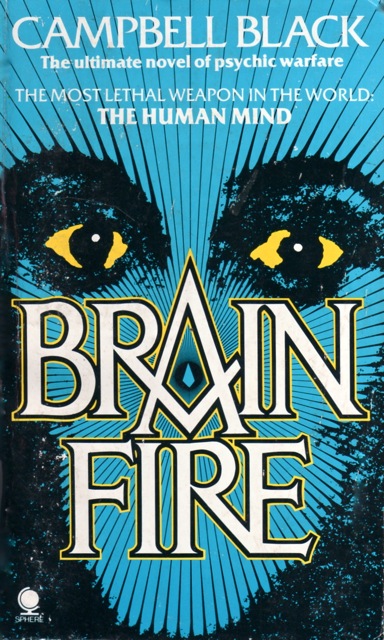
Born on this date in 1944, Campbell Armstrong was a Scottish author who died in 2013 and wrote many thriller/horror novels under a handful of pseudonyms. These paperback covers from publishers in the US and the UK are nicely indicative of that '80s era...


Wednesday, August 5, 2015

The Bog by Michael Talbot (1986): Lost in a Roman Wilderness of Pain


Couple weeks ago on the Reddit horrorlit page someone asked for recommendations in "archaeological horror." I don't know if that's an actual sub-subgenre but it was nicely coincidental as I'd just begun reading The Bog (Jove paperback, July 1987), the second horror novel from the late Michael Talbot. I replied to the OP and I sure hope whoever it was gets around to reading this one because it's pretty much what they asked for: "archeological finds open for an unsuspected horror." Ancient evils indeed are unleashed when two unsuspecting American archaeologists, working from Oxford University, unearth "bog bodies" in West England's Hovern Bog (bog bodies are mummified human corpses, preserved for even thousands of years, that are a unique and immediate window into the past). This ancient evil hearkens back to the Roman occupation, and even to humanity's earliest civilizations, when our imaginations were in thrall to sorcerers and demons, pagan rites and sacrifice. Cool!

Above you can read the back cover copy, as solid a set-up any reader could want. Throw in an imperious, mysterious Marquis who owns a vast estate which encompasses the bog and therefore whatever's found in it, plus his super-hot companion Julia who makes our protagonist, the American archaeologist Macauley, weak in the knees. Macauley and his grad student Hollister have found two bog bodies, male and female, which they date from the Roman Britain era, well preserved but bearing unseemly wounds: the woman was a suicide, a knife buried in her stomach by her own hand; the man has animal bite marks that bear no resemblance to any known bog wildlife. Macauley must penetrate the mystery of those bog bodies and what their deaths imply...


Complications ensue: townsfolk of Fenchurch St. Jude warn Macauley against messing with the bog (in the village inn no less, evoking memories of the Hammer Horror extras who tried in vain to stop folks heading up to Dracula's castle), then some of them end up dead. The Marquis hints he has mystical magical powers, as does hottie Julia, and Macauley, so thirsty for esoteric knowledge, is tempted by them both. Of course later Macauley's wife, teen daughter and young son are threatened, and he must balance his academic ambitions against his love for his family—and whatever immortal ravenous thing that stalks the Hovern Bog.

Stepback art by Gary Ruddell, best known for his magnificent Hyperion covers

Setting a horror novel in a dangerous, creepy locale like a bog was pretty ingenious; I mean it could almost write itself, right? Talbot does a decent job of evoking atmosphere and shoe-horning in some nuts and bolts about archaeological technique and academic historical study. There are passages set in the past and one long, powerful sequence owes much to The House on the Borderland (1908). At times though Talbot underwites his intriguing storyline and characters should have had more emotional depth to bear what he puts them through. None of this gets in the way of the story and Talbot brings it all together with a real '80s-style climax. While The Bog may not have the epic, decadent, and sure-handed feel of the author's debut, 1982's The Delicate Dependency, it's still a fun, albeit uneven, '80s horror novel.

Michael Talbot (1953 - 1992)

Sunday, January 5, 2014

Miming After Midnight

Clowns after midnight? Pshaw. Mimes are the true masters of silent midnight terror. Take a look at one of the best covers I've discovered recently - an unheard of novel, The Mime (HB Jove, 1978), by an unknown writer, Tony Profumo. And dig that tagline - Was she possessed by Eros - or by Satan? Spectacular!


Tuesday, July 9, 2013

Dean Koontz Born Today, 1945

Dean R. Koontz wrote dozens of genre paperbacks throughout the 1970s and early 1980s before he became the eternal bestseller king he's been now for over 25 years. Me, I haven't read a book of his since the first Bush Administration, and even then I quickly tired of his formula after just three novels. In fact, one of his books, Midnight (1989), has what I consider one of the worst endings I've ever read in a book written by an adult man writing for adult readers: the protagonist, after defeating some sort of science-gone-wrong evil, barges into his estranged teenage son's bedroom and proceeds to smash all his heavy metal records (revised to CDs, in the paperback reprints in the ensuing years), then forces him into an embrace. All's well that ends well, amirite? Man, as a teenage Jersey metalhead, I was all like "Fuck. You." to Mr. Koontz. Still: he got some pretty decent vintage covers, even for his various pseudonyms - Demon Seed (Bantam 1973, art by Lou Feck) and The Flesh in the Furnace (1972) definitely the high points.


Wednesday, April 10, 2013

Greely's Cove by John Gideon (1991): Praying for the End of Your Wide-Awake Nightmare

Fairly shouting at you from the cover that it's AN EPIC MASTERPIECE OF MODERN HORROR!, this 1991 paperback cover is generic to the point of meaninglessness: spooky castle in the mist framed by a full moon and surrounded by dark waters, its tagline boasting "It's the place where your worst nightmares come true" which could be said about any place in a work of horror fiction, and author John Gideon has no genre identity whatsoever (turns out it's the pseudonym of an Oregon politico named Lonn Hoklin, the name this novel's copyright is under). Greely's Cove was published at the outskirts of my "vintage horror fiction" dateline, and is definitely the kind of overly familiar tale that novels in the Dell/Abyss line were making obsolete. Still, I decided to take a chance since it has a bunch of rave reviews on Amazon. Maybe an overlooked classic? Er, no.

The small, foggy Washington town in Puget Sound is beset by evil and its everyday American citizens have been disappearing for months, leaving no trace behind. It's up to a regular cast of characters, some noble, some embittered, some doomed, to do battle against an ancient enemy whose evil knows no bounds...

I don't mean to sound too harsh or snarky; Greely's Cove is an agreeable and at times nicely grotesque horror novel, particularly in its climax. Its faults lie in the usual areas: there are far too many King and Straub touches, and Gideon's prose, while quite serviceable, falters under the weight of horror that he's trying to conjure up. Dialogue is often expositionary and wordy; an amateur's inexperience is all too obvious. I skimmed lots of pages after awhile, but fortunately got more into the story as the end neared, because the climactic battles and revelations were kinda epic. But only kinda.

However, I loved the modus operandi of the novel's villain - the Giver of Dreams: he forces the missing people to "live" the vast horrors of humanity's past, unwilling victims trapped in an all-too-real nightmare world. I wish Gideon had expanded on this idea as I found it truly horrific - can you imagine waking up to find you're a serial killer, a Nazi, a Mongol army's whore, a demonic child torturing its mother? And even enjoying it? Ick. I know this sounds terrible but... more please. A more powerful writer could have really taken this concept all the way, rubbed the reader's face in it, got in there deep and true. Oh well. One character really stood out too: a sad-sack boozehound named Mitch Nistler, a mortuary attendant driven to unholy extremes of lust and desire. And you know what that means!

PS. Finally I've figured out the font on the edition at top; it's ITC Benguiat. Designed in 1977, it was used on all kinds of paperbacks throughout the '70s and '80s, and has always been a favorite of mine.