Showing posts with label nancy collins. Show all posts

Saturday, February 15, 2025

Under the Fang, edited by Robert McCammon (1991): The World is a Vampire

Vampires, vampires, vampires! Loathsome creatures of the night stalking and snacking on humans across the globe! There's no escape! Whatever can we do?!

Nothing, it seems, or very little, to save ourselves. Thus is the setup for the stories in Under the Fang (Pocket Books, Aug 1991, cover by Mitzura), under the auspices of the Horror Writers of America coalition, with editing duties by iconic bestselling paperback author Robert R. McCammon. Akin to the zombie apocalypse anthos based on George Romero's movies, Book of the Dead (1989) and Still Dead (1992), (which of course hearken back to 1957's I Am Legend) all the stories exist in this new world, with each author bringing their own special methods of madness to the proceedings.

Virtually all the vampire anthologies published prior to the early Nineties were collections of classic stories, moldy golden oldies by the likes of Bram Stoker, Polidori, EF Benson, Crawford, Derleth, et al. Esteemed editor Ellen Datlow gave us Blood is Not Enough in 1989 and A Whisper of Blood in 1991, which featured all-new vampiric works by the cream of the genre's crop. I'll confess: I've read neither, even though I've owned them since Kurt Cobain was still alive. But those two volumes seem to be the first that showed that the old symbols and themes of vampire fictions could be given fresh new life at the end of the century. 

The vampires within Under the Fang exist on a spectrum of generic types: the typical night creeper; the almost-zombified monster driven mad by thirst; the brilliant military leader; the scientific sort looking for a way to walk in daylight; the Anne Rice decadent aesthete. Vampires have been dubbed cutesy nicknames, like "suckheads" and "fangers" and whatnot. That out of the way, let's get to the contents: McCammon gets a twofer, first with a metafictional introduction, in the guise of a doomed note from an unnamed narrator:

They've won. They come in the night, to the towns and cities. Like a slow, insidious virus they spread from house to house, building to building, from graveyard to bedroom and cellar to boardroom. They won, while the world struggled with governments and terrorists and the siren song of business. They won, while we weren't looking...

He handily sketches out the scope of the situation in a couple pages, setting us up for the tales to come. Second is his story "The Miracle Mile," of a family's drive to an abandoned season vacation spot and amusement park. Vampires have of course overrun it, and Dad is pissed. With his signature mix of corny sap and derivative horror, McCammon delivers perfectly cromulent reading material. It's just that I always find him square and dull and earnest, and not my jam whatsoever.

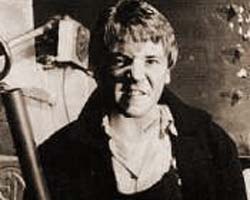
The recently-late Al Sarrantonio's "Red Eve" is an effective slice of dark, poetic fantasy in full Bradbury mode, which was common for him. I have no idea who Clint Collins is, but his brief "Stoker's Mistress" is a high-toned yet effective bit of metafiction about vampires "allowing" Bram Stoker to write his "ludicrous" novel Dracula... Shades of soon-to-be-unleashed Anno Dracula. Nancy A. Collins had already had her way with the vampires; "Dancing Nitely" is a perfect encapsulation of the modern image of the unholy creature: they all want to live in an MTV video scripted by Bret Easton Ellis. Contains scenes of NYC yuppies dancing under blood spray at an ultra-hip underground vamp bar, called Club Vlad, with a neon Lugosi lighting up its exterior. We may cringe looking back at it today, but back then this style was au courant du jour.

Late crime novelist Ed Gorman delivers an emotional wallop in "Duty," powerfully effective even though I was half-expecting how the turnaround was going to happen. I gotta try one of his full horror novels! Richard Laymon does his his usual schtick of adolescent ogling and rape fantasy scenarios rife with toxic masculinity in "Special," this story ends on an unexpected note of enlightenment. Better than other things I've read by him, but not enough to make me a fan. 

One of those writers whose byline makes me groan inwardly, J.N. Williamson (above), contributes a lengthy, pulp-prose-level Interview with the Vampire-esque work called "Herrenrasse" ("master race" in German, yuck) in which a hoity-toity vampire traps a potential Van Helsing in his apartment. They then engage in a lengthy dialogue of philosophical conceits of bloodsucking. Kinda cool, but Williamson's style can be pompous, overwritten in that pulpy, self-taught style that screams "show-off." Thomas F. Monteleone, he of the wonderful cutting edge Borderlands anthologies, contributes "Prodigal Sun," a brilliant vampire who had been an immunologist who now tries to cure their curse of bloodthirst. Well-written but so-so.

Together, Chelsea Quinn Yarbro and Suzy McKee Charnas pit their own fictional vamps—Count St. Germain and Dr. Edward Weyland, respectively—against one another in "Advocates," the most philosophically ambitious work here; no surprise, as both women approached the vampire as a concept in their other writings. Could've been better I felt, less than the sum of its parts.


Brian Hodge, 1991

On to the finest stories within: my favorite was Brian Hodge's "Midnight Sun," which is so well-conceived in scope and execution I daresay he could've written an entire novel using his scenario. Muscular and convincing, its setting of a military outpost in frozen wastes makes it a standout; the conflict, not only between humans and vampires but also between vampires themselves give the story a real moral heft. A close second was "Calm Sea and Prosperous Voyage," by Chet Williamson, in which a loving husband and wife experience tragedy and woe after escaping into a cabin in the woods. Tough, moving, unsettling stuff. 

Surprisingly, Lisa Cantrell (above), she of The Manse "fame," pulls out a little winner in "Juice." It ain't moonshine this good ol' boy is making a living from. "Does the Blood Line Run on Time?" by Sidney Williams and Robert Pettit, is one of the real bangers here, an action-adventure-horror offering that is oh-so Eighties in just the right way. Williams wrote a few horror paperbacks around then, and now I'm considering adding them to my want-lists.

Other stories here, by authors both known and unknown, run up and down the scale from ok sure fine to oh well whatever nevermind. This might not be the best antho of the era I've ever read, but the quality of prose is very high—this was the HWA, after all—even if the story itself doesn't quite succeed. Me, I could've done with some more graphic bloodshed/drinking, or classic Lugosi/Lee-style vamp action in the good old Les Daniels' tradition. No matter; your mileage may vary as well (PorPor Books enjoyed it maybe a smidgen more than I did). Overall, I'd say Under the Fang is an easy recommendation for your horror anthology and/or vampire fiction shelves.


Monday, May 6, 2013

Shock Rock, edited by Jeff Gelb (1992): The Great Rock'n'Roll Swindle

Brimming with monstrous mash-ups of horror and rock'n'roll, Shock Rock (Pocket Books, Jan 1992) takes the old-timey preacher scare that rock is the Devil's music not as a warning but as fait accompli. In his introduction, Jeff Gelb (editor of the long-running Hot Blood erotic horror series) points out the long relationship between rock'n'roll and horror movies and comics - so why not horror fiction (Alice Cooper says the same thing in his forward)? "At last count, less than half a dozen horror novels have attempted to meld rock and horror thematically," Gelb notes. Well, I think there is a reason for the rarity: that intertwining works wonderfully well for album covers and song lyrics, but it generally produces less than stellar horror fiction. Such is the case, sad to say, with Shock Rock.

I passed on Shock Rock when it was published, and my instincts were right. Most of the 20 tales Gelb assembled are, to not put too fine a point on it, adolescent and amateurish (I know, I know, you could describe a lot of rock'n'roll the same way and so think I'm being a hypocritical snob when I criticize the stories thusly). While there is a splatterpunk energy, too many are dorky and earnest, an outsider's imagining of what it's like to be a rock star, a drug addict, or a teenage rebel. And no Poppy Z. Brite?! She's one of the few horror writers of that era to have written with any sensitivity or authenticity about how music informs characters' lives and thoughts.

Thomas Tessier's "Addicted to Love" stands out as the best story of the lot, as its pure clear notes soar high above the cluttered, tuneless din of the rest of Shock Rock. Workaday Neil Jensen is a thoughtful music fan who likes - lives for - challenging, edgy, exciting rock music. He meets a woman at a show by The Bombsite Boys (a fictional band, well-named), a woman who tells him she likes Public Image and The The, The Cure and The Adverts.

Neil felt a tremor of excitement. If she could appreciate groups like those, she had to have some musical intelligence. He bought her a drink, reminding himself not to get his hopes up to high. He had been disappointed before, every time.

Then he gets her home, and she wants to hear a particular song, a song that is not challenging, edgy, or exciting. She wants to hear it over and over again.... Tessier can write, and has written convincingly about the music scene before, in his first novel The Nightwalker. Placing Tessier's prose within the same pages as Rex Miller's or Paul Dale Anderson's or Michael Garrett's is unfair; it only highlights how clumsy are their attempts to meld rock and horror.

1994 Pocket Books sequel

Other stories worth reading: "Vargr Rule" by Nancy Collins, a nicely sleazy werewolf tale, which contains one of the antho's most surprising scenes; Richard Christian Matheson's taut and fatalistic "Groupies," about you-know-what; and definitely "Requiem" from Brian Hodge. He creates a pretty believable art/prog-rock band of the 1970s and '80s, Grendel, who all die in a plane crash, leaving behind countless grieving fans and a rumored concept album about the Knights of the Round Table. "You Know They've Got a Helluva Band" from Stephen King mines baby-boomer dead rocker territory in a fairly by-the-numbers manner. Jimi Hendrix features in "Voodoo Child" - well, duh - Graham Masterton's contribution. It has a nicely personal vibe, a sadness about the passing of time and wild youth. "Flaming Telepaths" ends the antho, former punk singer John Shirley's swipe at smug televangelists - one of 1980s horror fiction's go-to villains.

Cooper and Shirley, 2001

The fault of Shock Rock is that too many of the authors simply have no feel for the written word, or for capturing human speech patterns and motivations; they may as well be re-telling a moldy-oldy EC Comics story, only adding more sex and graphic violence but no depth. Slapdash and junky, most don't even show a particular feel for rock'n'roll other than its most obvious trappings of sexist excess, substance abuse, and amps that go to 11. To me, that's the most shocking thing of all.

Tuesday, August 2, 2011

The Vampire: His Kith and Kin in Paperback Covers

This cover for Dracula Began, a 1976 novel by Gail Kimberly, is stunning: you got Vincent Price from Tomb of Ligeia with misplaced eyes, big black bats, a Gothic castle, village people on the hunt, and a totally incongruous lady's head on a platter. Amazing. Artist George Ziel is a master of the vintage horror paperback cover!

A repulsive old-man vampire adorns Karl Alexander's Curse of the Vampire from 1984. That certainly wouldn't work today, since we all know vampires now have perfect pouts and six-pack abs.
Ahh, I love this one! Le Fanu's 1872 classic Carmilla was reprinted in 1970 with this fantastic cover. Love the font, the woodwork, the frightened hippie chick cowering. Excellent!

I've got a couple of the vampire novels by Les Daniels featuring the Spanish vampire Don Sebastian de Villanueva, but I haven't read them yet. The Black Castle from 1978 is simple and to the point.

Traditional opera-cape-and-tux-clad Drac here, part of Fred Saberhagen's long-running Dracula novels. The Holmes-Dracula File, from 1982, is labeled "science fiction," which I find odd, since neither of those dudes fits in the genre.

The first sequel to her Sunglasses After Dark, Nancy Collins's 1992 In the Blood continues the adventures of Sonja Blue, as well as again featuring the art of Mel Odom.

Gothic romance from 1970, with exotic "vampyre" spelling. Ooh!

By-the-numbers rendering of Lugosi for a 1968 reprint of Bram Stoker's lesser-known works.

Groovy vintage Drac and his lady-fiend on the US cover of The Hand of Dracula! from 1977. I especially love the UK edition. Author Robert Lory put out a whole series of these modern Dracula adventures.

1977's Hounds of Dracula. Dracula's dog. I mean really people.

Peter Tremayne also wrote another Dracula novel, called Bloodright, and returned in 1978 with The Revenge of Dracula. Pretty standard, traditional image on this. Not sure about the blow-dried 'do, though.

A murder of crows, a quiver of cobras, a streak of tigers... and A Clutch of Vampires (1974). Nice. I think that's an Edward Gorey illustration, don't you? Raymond T. McNally was the vampire expert of the '70s.

Montague Summers was an eccentric English clergyman-scholar who wrote several books on the occult - from the suspect point of view of a true believer - and his most famous was The Vampire: His Kith and Kin (1928). This is the 2011 edition.

Thursday, July 14, 2011

Splatterpunks: Extreme Horror, edited by Paul Sammon (1990): The Filth and the Fury

We're all aware of the origins of the term "splatterpunk" aren't we? Feels like I've covered it a million times before, and if you have any interest in horror fiction you probably have a fairly good idea of its practitioners and artistic aims already. But just like every offshoot of a mainstream genre, people disagree over its identification and meaning. Basically, "splatterpunk" describes a small faction of horror writers in the 1980s and early 1990s who, while bestselling horror (or "horror") novelists were offering cozy, polite thrills to unadventurous readers, wanted to shake up conventional generic expectations. And they kinda pissed off quiet horror writers like Charlie Grant, Dennis Etchison, and even Robert Bloch himself with their "there are no limits" attitude.
For me, though, not solely gore for gore's sake were the splatterpunks; this wasn't just shock tactics without substance. No, these young writers wanted to fuse extreme violence and horror (the "splatter") with a confrontational social sensibility (the "punk") to provide a countercultural, more streetwise take on our collective fears at the end of the century. It was not just extreme violence and viscera and degradation - psychological insight into alienated characters was as essential as blood-on-the-walls-and-ceiling taboo-smashing. Outsiders are now insiders; listen to what they have to say...

Editor and film critic Paul Sammon, who'd previously produced documentaries on Platoon, Dune, and most famously Blade Runner, was so enamored of the movement he put together Splatterpunks: Extreme Horror. And even though virtually every author in this anthology states that they are not splatterpunks, it's obvious the stories themselves are, and that's really all that matters. They're willfully ugly and despairing and silly and angry and unflinching, sometimes all at once. This book was pretty much my jam back in the day; I remember eagerly buying my trade paperback copy of it at the 1991 Weekend of Horrors Fangoria Convention in New York City, and it's never left my collection.

Me in NYC 1991; in that bag is this book!

After a short intro from Sammon, the bar is set very high with the first story: Joe R. Lansdale's utterly harrowing "Night They Missed the Horror Show." I've read this several times over the years and it never fails to feel like a solid punch in the gut. Redneck racism, one of Lansdale's staples, is exposed in all its soulless and dehumanizing excess. He pushes our snouts right into the rawest filth. It'll leave you feeling hollowed out and horrified. Is it art? It's unforgiving and the bleakest of the bleak, so... yes? Yes. A modern classic it is.

Lansdale his ownself

One of the few non-American writers in the movement was the esteemed (and bestselling) Clive Barker. But of course. His Books of Blood changed the nature of horror fiction in the 1980s. "The Midnight Meat Train," with its ludicrously graphic title, is one of his most vividly realized and icily graphic tales: a city that feeds on innocent lives, a race that exists solely so that humanity can ignore it, a god that demands the ultimate fealty, a man whose urge to know leads to a horrible new life. Another classic:

It was a giant. Without head or limb. Without a feature that was analogous to human, without an organ that made sense, or senses. If it was like anything, it was like a shoal of fish. A thousand snouts all moving in unison, budding, blossoming, and withering rhythmically...

"Film at Eleven," from actual unapologetic splatterpunk John Skipp, of Skipp & Spector fame, springboards from the on-air TV suicide of Pennsylvania politician R. Budd Dwyer and the spousal abuse of a diehard Oprah fan. The final effect of eternal recurrence seems almost cruel, but it implies that justice does not come easy. Not bad. I've written before of my appreciation for Douglas E. Winter's zombie parodies of contemporary literature, and here it's "Less Than Zombie." Capturing Bret Easton Ellis's style of anomie and privileged rich-kid sociopathy perfectly - And, oh yeah, the thing with the zombies - it ironically prefigures Ellis's American Psycho. It's also the first time I encountered the curb stomp, nearly a decade before American History X.
Recently deceased splatter film connoisseur Chas. Balun presents an essay, "I Spit in Your Face: Films That Bite," on the most extreme gore movies of the day: loverly films such as Henry: Portrait of a Serial Killer, Nekromantik, Last House on Dead End Street, and Roadkill. He warns "hipsters" not to act too blasé when confronting these flicks; they'll knock those sniggering grins right back through their teeth, or something. Awesome.

Freak-show fiction became something of a thing after Katherine Dunn's masterful Geek Love (1989) was published, and that's where "Freaktent" comes in: Nancy A. Collins is a solid writer which gives the story a real grounding for its natural physical atrocities: Images of children twisted into tortured, abstract forms like human bonsai trees swam before my eyes. Mediocre TV horror-movie director Mick Garris sleazes it up with "A Life in the Cinema," about hack horror director who adopts a soul-and other things-sucking monstrous turd baby for his next exploitation flick; it's a real charmer. The lost chapter from Ray Garton's Crucifax is presented here, so grotesque his publisher excised it from its paperback edition, but I seriously prefer "Sinema," which appeared in Silver Scream. Read that one instead.

Hugo Award-winning Martin in the 1970s

Although today he's known as an outrageously popular fantasy author, George R.R. Martin wrote a matter-of-factly horrific science-fiction story in 1976 which is included here, "Meathouse Man." It's the oldest story collected, but it's also one of the very best, an emotionally complex story of a man, his work, and unrequited love. Oh, and zombie sex on distant planets called corpseworlds. Probably the best-written and most affecting piece in the anthology: He slept with a ghost beside him, a supernaturally beautiful ghost, the husk of a dead dream. He woke to her each morning.

Spector, Lansdale, Matheson, Schow, Garton, McCammon, & Skipp:
Yes, The Splat Pack c. 1986/7

TV writer Richard Christian Matheson (yes, the son) contributes two of his short-short fictions, "Red" and "Goosebumps." Short sharp shocks, nicely done. Reminds me that I'm still trying to find a decent copy of his collection Scars and Other Distinguishing Marks, which I lost ages ago. Another British writer, Philip Nutman, who interviewed many filmmakers for Fangoria mag, presents a grim picture of the bloody-minded no-future youth of his home country in "Full Throttle." Tough stuff; I can practically see the young Tim Roth and Ray Winstone carousing in a movie version.

Also included are solid stories of varying grit and grisliness by Edward Bryant ("While She Was Out," years later made into a film), Wayne Allen Sallee ("Rapid Transit," first in a trilogy of short urban terror tales), and Roberta Lannes ("Goodbye Dark Love," which I'd first read in Cutting Edge) also feature, each probing the depths of contemporary non-supernatural horror with an emphasis on character. The worst in the anthology is truly Rex Miller's "Reunion Moon," which I'll not even describe except to say it's a piece of shit.

Splat poster boy David J. Schow is not included here for various reasons, as Sammon explains, but it's just as well because I prefer his non-splat work. I thought J.S. Russell was a Schow pen name but it's not; Russell's "City of Angels" reads just like one of Schow's stories, so I think it was a fair guess: Porqy, he's got this thing about the nuts and how they're the "bestest part"... he's been talking about baby nuts for days. "I figure," he says, "they got to be more tender. Tastier, like lamb or baby corn," and pops them in his mouth like wet jelly beans.

Splatterpunks finishes with Sammon's 75-page (!) essay on the movement, "Outlaws." While it's unearned and ridiculous to compare these writers to hallowed transgressors like de Sade, Baudelaire, William Burroughs, Harlan Ellison, J.G. Ballard, as he does, trying to give weight to a fleeting literary moment that was named as an inside joke, he certainly helped me get to reading lots of those folks back then. It's okay to simply be a graphic yet thoughtful horror writer but I guess he didn't feel that way. He includes an extensive splat reading list and influences (and presciently notes that Ballard's Crash would be a perfect David Cronenberg, uh, vehicle).

Like a lot of anthology editorials of its day, "Outlaws" is overwrought and overly generous to the practitioners. Virtually none of the authors appreciate the label, and only a handful are still active today. Only Garton and Lansdale continue to publish well-received novels; Skipp is only recently back after a long hiatus; Barker has slowed down his publishing pace considerably. These authors transcended the style. A lot of splatterpunk might seem like a shallow, adolescent pose, a "look how gross and rebellious I can be" kinda thing, but plenty of it has heart and attitude—and guts—to spare.

Monday, July 19, 2010

Midnight Graffiti, edited by Horsting & Van Hise (1992): What Thou Lovest Well

Something new for Too Much Horror Fiction: guest blogger (& girlfriend extraordinaire) Ashley Louise!

I especially love horror in short story form, so I was delighted to find a new collection - and thrilled to find it so gratifying. Midnight Graffiti (Warner Books, Oct 1992) is an engaging anthology from the now-defunct magazine of the same name from the late '80s. It specialized in all kinds of horror and weird fantasy fiction from authors both new and established.

I will give reasonable warning that the biggest difference with this collection from others I have read is the editing. I would prefer to be almost entirely unaware of the editor's existence, and allow their selections to speak for themselves. Unfortunately, Jessica Horsting will not shut up. She opens the anthology with an eight-page introduction, smugly explaining to her readers every obvious, bromidic reason that people are fascinated by horror. Further, Horsting attempts to flatter each author with an introductory bio, but just comes off overly congratulatory and all too chummy. It is painful. I can think of positively no reason for any collection to have twenty-four introductions written by one person. What immediately springs to mind is how much more charming it would have been to ask each of the authors to write their own short bio. Ah well, tant pis.  Irksome editor aside, this is one of the better horror anthologies I have read.

David J. Schow expectedly leaves you green around the gills with "Bad Guy Hats"; J. Michael Straczynski's "Say Hello, Mister Quigley" is simultaneously disturbing and heartwarming; Joe Lansdale's "Bob the Dinosaur Goes to Disneyland" is a fun and clever satire, though not at all horror; "Blue on One End, Yellow on the Other" by K.W. Jeter is a heartbreaking insight into mental illness and addiction.  I had heard about Steven R. Boyett's "Emerald City Blues" - shocking! disturbing! Nah, just grown up Wizard of Oz. I found it to be a bit underdone. It did have a great line, jauntily poking fun at military/old man lingo:  Goldilocks was SAC - Strategic Air Command - headquarters in Omaha, Nebraska; ETA was Estimated Time of Arrival. It was fun to think up names to go with important things. Ha.

The celebrity authors contribute varying stories. Stephen King's "Rainy Season" is passable, but classic King filler; Neil Gaiman impresses as always - perhaps more so alongside some of the less experienced authors included in this collection. The mighty Harlan Ellison predictably thrills me with his anecdotes, and Dan Simmons - oh my. His award-winning short story "The River Styx Runs Upstream" is easily one of my favorite short stories, ever. Mother never blinked. At first I didn't notice; but then I began to feel uncomfortable when I saw that she never blinked. But it didn't make me love her any less.


Gil Lamont and R.V. Branham were truly the surprise gems. Lamont's "Sinus Fiction" was evocative of Simmons's 1990 science fiction masterpiece Hyperion - almost difficult to picture in its stark originality. He is an editor, and seems to have written only one book, The Great Mildew Creek Harlot Massacre - erotic fiction, and only a few copies to be found, all for more than $30 US. Huh. Branham's first of two stories in this anthology, "The New Order: 3 Moral Fictions," was remarkable, and I would love to see it expanded into a novel. Sadly, he seems to have written just one book I can find - on cursing in a profusion of languages.

As with any collection, there are the middling stories. Among those I found to be particularly unreadable: "The Domino Man," "Salvation," and most of all, "Rant" by Nancy A. Collins. The final story, "Dark Embrace," comes from (mercifully silent) co-editor James Van Hise and is an adroit, if somewhat predictable, story of a boy who is forced to mature with cruel haste. It provides a fulfilling ending to a diverse and appealing collection.  As horror short story collections go, this one is a stand-out. It has just enough timeless and affecting stories to put it ahead of many other collections. I am pleased to say it is just what I was hoping for - and more. Unfortunately, the cover... meh. Nice stock photo or even Giger ripoff, I guess.

Thanks again to our special guest blogger, Ms. A. Louise. In the meantime, Will Errickson has begun a 600-page horror novel by a real writer so it might be a minute or two before he gets back.

Friday, April 2, 2010

Still Dead: Book of the Dead 2, edited by John Skipp & Craig Spector (1992): Everything that Dies Someday Comes Back

What distinguishes Still Dead: Book of the Dead 2 from its 1989 predecessor? Easy: better stories, better writers, more gore, weirder gore, surreal gore, and women. It really is that simple. In the three years that separate the two John Skipp and Craig Spector-edited zombie-thologies, in which every story is contained within the George Romero universe of zombie hell, several female horror writers had published well-received shorts and debut novels. Kathe Koja, Nancy A. Collins, Elizabeth Massie, Roberta Lannes, and perhaps most well-known of all, Poppy Z. Brite, are all accounted for in Still Dead, and it makes all the difference. Their stories here are original, inventive, risky, and astonishingly well-written. Nobody's trying to self-consciously out-gross anyone else, or prove how splatterpunk they are, or show how flip and casual they can be about brain-eating, dead children, and evisceration. Thank zombie Jebus for that.

Mark V. Ziesing hardcover, 1992

To wit: Massie gets down-home with graphic zombie sex in "Abed," and Collins brings the goth-punk kids to the show in "Necrophile." Koja's "Prince of Nox" imagines the other side: her protagonist becomes a zombie who, sadly, still maintains some semblance of sentience and goes on a quest to rescue his damned brethren. Nancy Holder presents a liberal zombie-theology in "Passion Play," in which an old German town wants to use a zombie as Christ in its traditional performance so it can be truly and literally crucified. Nice little Easter-appropriate twist at the end, too.

The lead-off story, "The Old Man and the Dead" from Mort Castle, by whom I've never read anything else, is one of my favorites in modern horror. Prefiguring the current bestselling craze of melding zombies with classic literature, Castle imagines a man - quite obviously Ernest Hemingway if you paid attention in your first-year literature class - who encounters in Spain the horror not of World War I, but of the walking dead.

"I don't think I like this," Adam Nichols said. "I don't think I like it at all."
"I am sorry, but what you like and what you dislike is not all that important, if you will forgive me for saying so," Miguel said. "What does matter is that you are a good shot. You are one of our best shots. So, if you please, shoot some of these unfortunate dead people."

Love. It. Douglas E. Winter returns with another grim parody of (then-) contemporary hip-lit, "Bright Lights, Big Zombie" (You are not the kind of zombie who would be at a place like this at this time of the morning), and Dan Simmons, a schoolteacher before becoming a full-time writer, takes "This Year's Class Picture" to autobiographical heights (or depths). The surreal gore turns up in Brooks Carruthers' "Moon Towers," to which I still remember the climax 20 years later; famed cartoonist Gahan Wilson has "Come One, Come All," a sort of Bradbury/Sweeney Todd mash-up, and Skipp and Spector themselves present an odd poem, "The Ones You Love."

But really this tome is owned by "Calcutta, Lord of Nerves," Poppy Z. Brite's darkly poetic rumination on the nature of zombiedom and a strangely beautiful city besieged by filth and decay both natural and not. There's no real plot, just a decadent, luxurious, and deliciously gross sensibility:

The dead like pussy too. If they are able to catch a woman and disable her enough so that she cannot resist, you will see the lucky ones burrowing in between her legs as happily as the most avid lover. They do not have to come up for air. I have seen them eat all the way up into the body cavity. The internal female organs seem to be a great delicacy, and why not? They are the caviar of the human body. It is a sobering thing to come across a woman sprawled in the gutter with her intestines sliding from the shredded ruins of her womb, but you do not react. You do not distract the dead from their repast.

It's this sort of acceptance of horror and death that makes the tales of Still Dead believable, makes them linger, makes them sting; despite their visions of the human body in extremis, these stories are still about people, about men and women who matter-of-factly witness the worst the world has to offer, and continue on. It's not just the the dead who come back; it's living people too.

But I'm still not crazy about this cover, either.