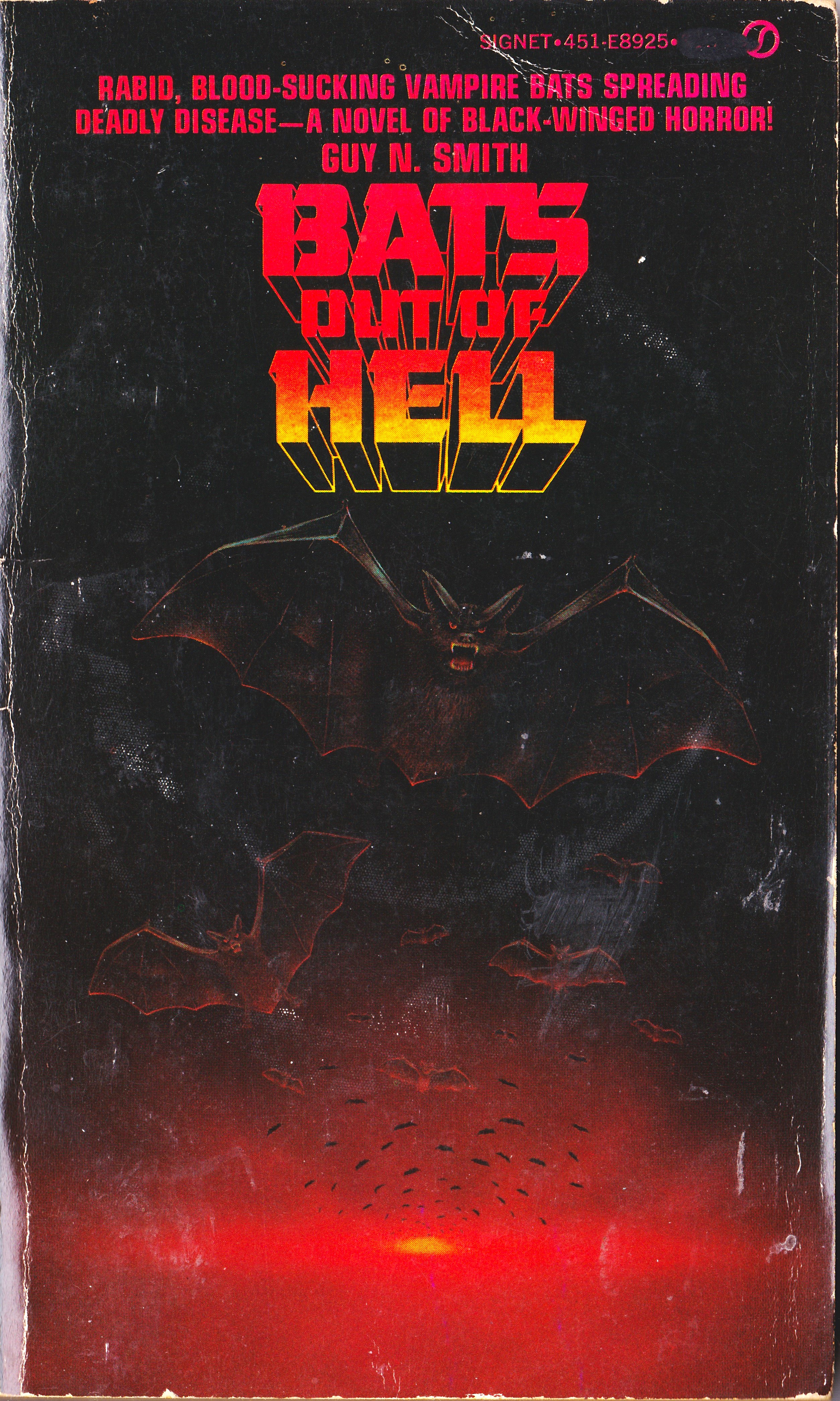
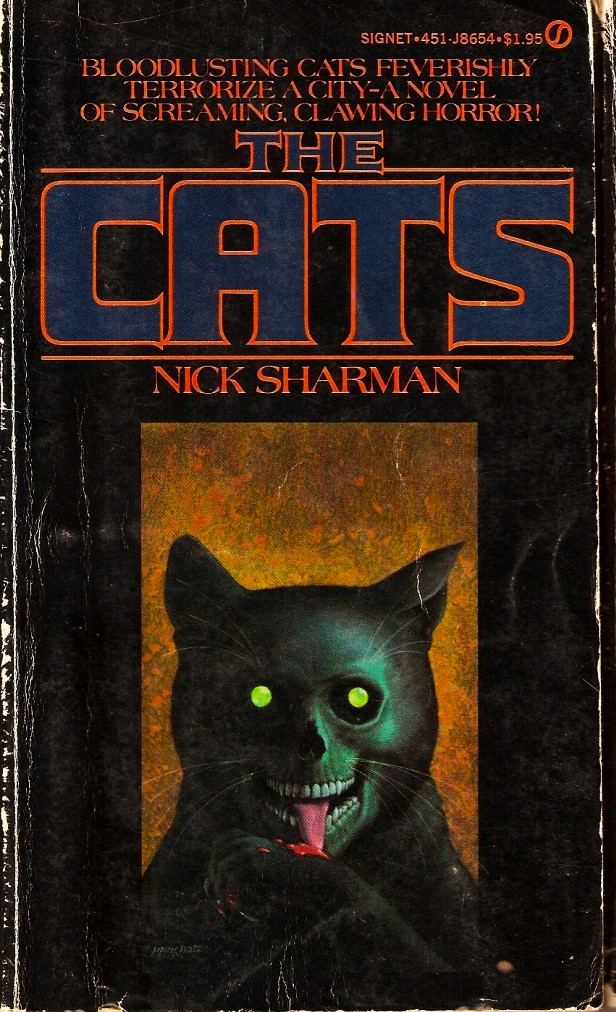
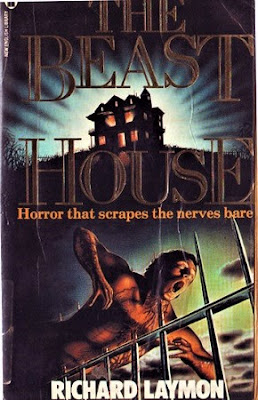
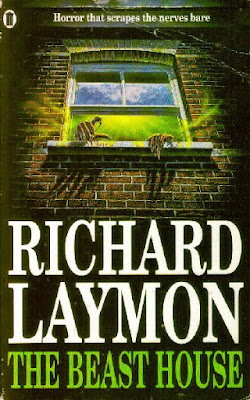
Showing posts with label new english library. Show all posts

Friday, January 17, 2020

The Stand by Stephen King (1978/1990): Dancing on the Grave of the World

"You're nothing! Oh pardon me... it's just that we were all so frightened... we made such a business out of you... I'm laughing as much at our own foolishness as at your regrettable lack of substance..." 
—Glen Bateman, upon first meeting Randall Flagg

Let's get right to it, gang: The Stand has never been one of my favorite Stephen King novels. No need to get excited; I'm well aware of its status as maybe his most beloved book, if one may use that word for a novel about a plague that kills more than 99% of humanity. Despite its imposing length, it may be the one Stephen King novel people have read who've read only one Stephen King novel.

 
 Doubleday hardcover, Oct 1978
Bosch-inspired art by John Cayea
 
But when I read it in 1987 or '88, I found it lacked what I most loved about Stephen King; that is, an intimacy, an atmosphere of the chummy detailing of the American quotidian that he'd done so supremely well in his other novels and short stories. Reading King felt like home, and The Stand most definitely did not feel like home. How could it? It is an epic story about people who no longer have one and are desperate to build a new one. That epic length never bothered me: I'd already read It (1986) as soon as it was published in hardcover. But the giant panoramic post-apocalyptic canvas really did not appeal to me, and while I read almost every other King work over and over and over again, The Stand was one and done for me.

King in 1978

Most horror fiction fans probably have a decent understanding of the book's publication history: Doubleday hardcover in '78, Signet paperback in '80, then in 1990 another Doubleday hardcover edition in which King put back in something like 500 pages from his original manuscript that he himself had edited out before its first publication (Complete & Uncut, this new edition said; Uncircumcised would've just been impolite). In case you don't know the particulars, he spells them out in more detail in his intro to the '90 edition. Going by online reviews, this expanded edition is either: A) the best thing ever; B) the worst thing ever. Many prefer the shortened original. People have strong opinions about Stephen King books, it may surprise you to learn, especially one regarded as his greatest. In fact, you're about to read one now.

 First Signet paperback, Jan 1980
Don Brautigam cover art

(Okay, friends and neighbors, before I forget, here there be spoilers galore. I'm gonna be rambling all about The Stand and you won't want to continue if you haven't read either version. But maybe come back after you have!)

Doubleday hardcover, May 1990

Working in a bookstore when this massive 1,200-pager arrived on shelves, I was interested just enough to skim the new opening and closing chapters. The opening is now the family that careens into Hapscomb's Texaco at the beginning of the '78 version; it's fine, I guess, starting off the story in a panic (They're all D-E-A-D down there). But I recall being particularly put off by the final chapter, in which the evil, otherworldly Randall Flagg's time has come round again... accompanied by a Bernie Wrightson illustration that's entirely too comic-booky. It seemed all too obvious, weirdly unimaginative (but probably a way to link the Gunslinger/Dark Tower series into it, which King was now writing and Signet  publishing in earnest). I was deeply unmotivated to read this new leviathan, and remained so... till now.

I'd never seriously considered rereading The Stand. What a commitment! Perhaps it was something deep-seated in my unconscious, who knows, guess that's why I can't even recall how I picked it up at the beginning of December, because before I knew it was knee-deep in that mother. Reading the 1980 Signet paperback—I'm happy to own a mint first-print of it, but I'm not a monster, I do have a beat-up copy for actual reading—I was something like three or four hundred pages in and the story-line felt... constrained. Uptight. Airless. Condensed. I began to think maybe there was something to the idea of the complete uncut edition after all. Maybe I did owe it to myself to bite the bullet, go for broke, ride the lightning, and dive in. So I put my reading on hold till I was able to locate a nice, also first-print, sorta mint paperback (published in a sturdy mass market edition in May 1991) for a sawbuck, then went back and started over a week or so later. Seriously. I did.

 
And I'm not gonna lie: it was a grind. King's well-known weakness to overstuff his narratives with irrelevance and folksy analogies is on full display. He went wide instead of deep, expanding but not layering. The problems with The Stand are more serious than simply the number of pages: the real fault lies in execution, in writing, in characterization, and in scenario. Neither the 1978 nor the 1990 version is exempt from these fatal flaws; the longer edition simply reveals these flaws as baked-in, that's all. King famously said back in the '80s that his books were the literary equivalent of a McDonald's meal, but that junk food's still gotta be fresh, hot, and correctly salted, right? Right.

Well-known and -loved characters like Stu Redman, Frannie Goldsmith, Larry Underwood, Nick Andros, et al, all get extra sentences in their personal histories, but nothing I found essential or particularly enlightening. Better were the vignettes of superflu survivors who meet grisly ends, with King evincing both sympathy and merciless horror: a Catholic man whose family dies but won't commit suicide because it's a mortal sin; a child on its own falls down an improperly sealed well but does not die right away. Chilling, classic King... but mere crumbs.

Anchor Books, 2011

Also better and included now is one of King's patented family breakdown scenes that's top-notch. Early on, pre-apocalypse, it's pregnant Frannie, our heroine, in an argument with her mother in the family's parlor drawing room, whose hysteria over Fran's out-of-wedlock family way borders on the absurd. The confrontation crackles with real emotion, King getting at class and social standing and good breeding all at once. I hungered for more of this kind of King Americana.

 "How could you do something like this to your father and me?" she asked finally... "How could you do it?" she cried. "After all we've done for you, this is the thanks we get? For you to go out and... and... rut with a boy like a bitch in heat? You bad girl! You bad girl!"

New English Library, 1988 reprint
 
Trashcan Man, a pyromaniac gutter bum, with stupid dancing and cries of "Cibola," remains a tacky, tasteless character. And then King unleashes, in the uncut, a dude known as The Kid, so now we've got Trashcan and the Kid (heeey! don't tell me you forgot that Saturday morning teevee classic). It is a dopey read, a side travelogue no one asked for, almost too King for King, if you know what I mean. "Kill your darlings" goes the old writers' adage, and this darling should have died, died, died. The Kid is a caricature of a King character, a parody. While the Kid comes to disturbing end, he's cringe-inducing, dressed like a greaser extra from, well, Grease, spitting out embarrassing dialogue like "Coors beer is the only beer, I'd piss Coors if I could, you believe that happy crappy, awhoooooga" then sprinkles in some Springsteen and Doors lyrics. Then he rapes Trashy with a pistol. You believe that happy crappy?

Despite the various gross, gruesome scenarios King revels in, there's a naivete I hadn't noticed on first read. This depiction of the good folks of Boulder rebuilding society, all-American salt-of-the-earth types, was just so square. Why, they even have a ready-made town drunk and a hot-rodding teenager to contend with, and good god I was up to here with old prof Glen Bateman's observations about "-ologies" not being enough anymore, the glad-handing and back-slapping, the jokes during their endless, oh god endless meetings to figure out how to get busy being born all over again. Like everybody just up and knows Robert's Rules of Order and has a perfect conception of deploying committees and subcommittees and voting and vetoing and accepting in toto and everyone is happy to vote for the main characters.

New English Library paperback, 1991

Speaking of characters, too many fade in and out under the weight of the expanded narrative. Women are, in old-time pulp fashion, described in terms of physical appearance. And the endless litanies of names! If one more character said about another "Joey Shmoey, by name" I was gonna plotz. "Sally Lovestuff, her name is," or "Goes by the name of Bigtop Ragamuffin, he does" or "Tall, pretty girl, she is, that Wendy Jo" and "Heckuva nice guy, sounds like, over this jerry-rigged CB contraption we got going on here." Their dialogue is irredeemably corny, as if virtually every character was being voiced by a cast of cracker barrel regulars. He's always populated his books with jes' folks types, but Jesus everloving Kee-rist, King, did everybody who survived the superflu just walk fresh off the set of "Hee Haw"?

I'd forgotten deaf-mute Nick Andros was even around, and overshadowing him is a crime as he's one of the novel's most sympathetic characters. His sacrifice during Harold Lauder's bombing is one of the novel's high points, maybe its most heartbreaking moment: He couldn't talk, but suddenly he knew. He knew. It came from nowhere, from everywhere. There was something in the closet. Rereading it just now to get this quote right, hairs on my arms stood up. Nick's dream appearances to poor Tom Cullen, explaining how Tom has to try to save Stu Redman's life, are touching—if a little too convenient plot-wise.

 
 French edition, 1981

Speaking of Lauder, how's he for King's prescience about a certain type of American male we see all too often these days? The creep, the outcast, the psycho, the loner (today he's the incel, the school shooter, the edgelord, the MRA, the dude who complains about "nice guys" and getting "friendzoned," folks, these entitled losers are nothing new). Nadine Cross's unholy seduction of him for Randall Flagg is disgusting, sad, and all too successful (she lets him fuck her in the ass but not in the pussy, saying that will keep them pure for Flagg, my goodness what a lovely couple those two make). Harold's suicide after the bombing sticks in the throat—men like him shouldn't get free of the consequences of their actions so easily, even if they do express remorse as he does in a suicide note.

 Later '90s reprint

Let's just say it: for all his storytelling prowess, King can be a lazy writer. Much of the novel I read on autopilot; for as long and weighty the book is, it's easy—too easy—to read. Complexity, density, ambiguity is out; useless puffery and bloat is in. I skimmed pages because King was repeating himself, describing things I already knew: someone grimacing, people gossiping, everybody walking every goddamn place, Stu calling Glen "baldy," Flagg grinning, Fannie crying, I mean sweet Jesus Fran crying. He uses simple phrases over and over, engages in sophomoric philosophizing, his details about character behavior ring false: I lost count how times someone laughs till tears stream down their cheeks, uses someone's name more than once in a conversation, is described as being "naked except for shorts" (i.e., not naked), etc. And how much do you like reading about car-crash pileups? There are more of those here than in a J.G. Ballard novel. Where was everybody going?

And where's the mass breakdown of society? That's what I felt the '78 edition was lacking, why the story felt abbreviated. I expected more in the complete edition, but King takes the easy way out. Rather than do the heavy lifting of imagining and describing the political and social fallout as the world's (is it the entire world? This is never made clear for no real reason) population succumbs to a man-made disease, King presents his scenario as fait accompli. There's more of the military scientists realizing the enormous oopsie they've done and their futile attempts to fix it, which I liked as it was precisely the kind of approach I felt was missing from the '78 edition. I can't help but think this was a huge miscalculation, leaving out the nitty-gritty of not only world-building, but world-destroying. I needed a bigger bang, not this whimper. Ironic to say this about a 1,200-page novel, but I wanted more.

 Later Signet reprint with iconic Eighties typeface

It's all too easy today to see the creaky underpinnings and cracks in the foundation of King's scenario. Again, I needed more social apocalypse. If you're gonna have superflu-sick black soldiers dressed like pirates take over a TV station and begin to execute white soldiers on live broadcast television, you better bring some wit, irony, or satire to the proceedings; just slapping it down bald-faced on the page makes you seem oblivious to the racist tropes you're invoking... or maybe not even oblivious. It's dangerous ground, and if you're gonna tread on it, know what you're doing. Have a bigger, more audacious plan. Reveal the racism, the sexism, the classism and all the other -isms that permeate American society, that have festered and eaten us from within, and which now have exploded in the advent of the end of the world.

Speaking of racism, what of Mother Abagail Freemantle, the century-old black woman who is the locus of the survivors' dreams and visions, a wizened, hearty Christian woman of the Midwest who knows well the time is nigh and perhaps the Lord in all His infinite wisdom and glory will show her a way to guide these good people in their final confrontation with the Walkin' Dude, the hardcase, the Man in Black, please allow him to introduce himself, Randall Flagg? While King gives her a real backstory, strength, and fortitude, the fact that she is the only black character is conspicuous. I feel this is narrow-mindedness on King's part, a lack of imagination in a work that is intended to be the opposite!

Finnish translation, 1994

King has never shied from letting it all hang out (something he may have gotten from goodbuddy Harlan Ellison). This book was written by a guy of his era, a Cold War kid. It's a book of its era too; that is, the late 1960s and 1970s. Its creation was inspired by the kidnapping of Patty Hearst. The death of flower power and the downfall of Nixon propel its engine (indeed, The Stand is so of its time that it presages both Three Mile Island and the Jim Jones mass suicide in Guyana). The lyrics of Bob Dylan, John Lennon, and Jim Morrison float through the prose and dialogue and epigrams. Springsteen too, but he's a '70s guy, so it fits that zeitgeist I'm talking about. Larry Underwood's rock star burnout reads more like late '70s scenario too... Warren Zevon, anyone?

Our villain Randall Flagg's nickname is the Walkin' Dude, and he walks like a hitchhiker, but hitchhiking was vastly out of public consciousness by the time the '90s arrived. Hitchhikers weren't killers on the road, despite what the Doors said; hitchhikers got picked up by serial killers. So changing the dates to 1990 and switching in Bush for Carter and so on is just that: it changes only the dates and the names, not the psyche of the characters, and country, involved. Like Glen Bateman's estimation of Randall Flagg himself, this aspect of the book was a big nothing. And Flagg is a big nothing, but not in a horrific way: nah, he's just a grinnin' fool, like Bill Paxton in Weird Science or something.

German translation, 1985

People like to read about themselves, about regular people in extraordinary situations, and King has always provided that pleasure. Larry Underwood's grueling passage through the Lincoln Tunnel is certainly an all-timer sequence in King's output, and there are many scenes of dire heroics, such as the shootout between our heroes and the men who've been keeping several women as sex slaves is quite good: Four men, eight women, Fran's brain said, and then repeated it, louder, in tones of alarm: Four men! Eight women! Nadine Cross's college experience with a Ouija board, in which Flagg contacts her years prior to the book's events, was a nice touch too in the expanded version. But these sequences are very few and far between, which I was not expecting at all. For such a long book it is curiously empty of import.

In fact I found the latter half to be tighter in every aspect, and that climax, long-maligned, not nearly as disappointing as I'd recalled. Reading about Flagg and his coterie of boot-lickers and hangers-on in Las Vegas who've formed a cult around him that would make Manson proud is infinitely more interesting than those goody-two-shoes Free Boulder folks. Many readers have complained of the deus ex machina, virtually a literal "hand of God" (even noted as such by Ralph in the final seconds) that brings about the climax. It has nothing to do with the travails of Mother Abagail, nor any of the people of Boulder, so there is no ultimate confrontation between good and evil as the medieval-style cover art suggests.

French J'ai Lu editions, 1992

It was almost a relief, not having a giant ending that exhausts readers. This is, I know, the opposite of many readers' experience, who prefer the first half of the book. The 1990 edition expands, after their witnessing the nuclear doom of Flagg's Vegas, Stu and Tom's hard road back to Boulder, a bitter denouement that drags, I suppose, appropriately. So having Flagg reappear in the final pages struck me as pointless, a cheap twist...

Large-scale, good-versus-evil horror is not for me. My long-ago read of The Stand was the first inkling that I was outgrowing this pedestrian worldview. My other two big go-tos back then were Clive Barker and H.P. Lovecraft, who didn't deal in this kind of Manichean duality; I preferred ambiguity and agnosticism, subversion and confrontation, certainly not King's idea that "horror is as conservative as a Republican banker in a striped suit." Today I've outgrown completely this "tale of dark Christianity" as King himself puts it in his intro.

While I wasn't actively reading the book, I was also watching HBO's devastating historical drama Chernobyl, an all-too-relevant coincidence. The show's images of abandoned houses and tower blocks and vehicles and pets and  the dead and dying bodies were utterly haunting, heartbreaking, gut-wrenching. Never once did King's descriptions of similar landscapes affect me the same way; he's unable to scale the heights of his imagination with his pen. These grievous oversights and failures actually angered me: ask my wife about the rant I went on about how displeased I was with the book during our drive to a relative's house on Christmas Eve! Or rather don't ask my wife about my Christmas Eve rant. I mean and I wasn't even high.

It comes down to this, and I'll admit it seems almost churlish for me to say so, but I can not recommend either version of The Stand. The 1990 uncut edition expands on the weaknesses of the 1978 version, making that book's faults even more obvious, while adding new ones. Despite random strong passages and scenes, there is so much shallowness, naivete, and lack of commitment to the central idea—a grand battle between good and evil that never comes to pass—The Stand left me disappointed in a very deep and lasting way. This surprised me a lot; I was unprepared for how very little I enjoyed this book.

While my rereads of two other King novels I was never fond of, Carrie and The Shining, were surprising successes, The Stand remained as I'd found it nearly 35 years ago: foundering under its own weight and undone by a banal, half-baked theology. On this reread I noticed how larded it is with middlebrow observations of human relationships, American culture, and societal ties; and not nearly as profound as it thinks it is: all in all, a deeply superficial account of the end of the world. As a fan of vintage King I don't understand the novel’s esteemed status, other than nostalgia by fans who first encountered it as inexperienced readers. It pains me to say all that, but here I am, making my honest stand.


Thursday, January 17, 2019

Eat Them Alive by Pierce Nace (1977): Green Hell

They were monsters—greedy green monsters! 
They looked as if they would eat anything they could catch, chewing it to bits in their enormous jaws... One of the mantises had cornered a man... who couldn't run enough to escape the wildly dashing insect. It flopped him onto the ground and began eating him as if he were a fish, a hunk of meat, anything edible. 
And it did not bother to kill him before devouring him. 
He lay kicking, and no doubt screaming, as the green monster ate him alive.

From a mind deranged springs this ludicrous, bat-shit bonkers sleaze-horror novel about giant people-eating praying mantises. This is the book that's either the zenith or the nadir of paperback pulp-horror fiction. In fact I feel guilty selling it as either because as of today, this book is impossible to obtain for less than $300, and it is not worth that no matter where it stands on the horror scale. Eat Them Alive—its title alone appealing to our basest fears, crude and simplistic as a tabloid headline, humanity reduced to food—is truly garbage. There's no percentage in arguing otherwise. And yet...

First published by Manor Books in 1977 and then by New English Library (with cover art by Tim White), Alive is amateurish, moronic, thoughtless, sadistic, repetitive schlock with no redeeming value whatsoever. What enjoyment there is comes in the form of disbelief. You'll be amazed at the lack of any attempt at realism in any aspect. You'll be astounded at the depraved depths to which the author can descend! Pierce Nace (more on this person later) piles one outrageously graphic scene on top of another like a pulp writer suffering a fever dream.

They were clambering over each other to escape their caves or undersea holes or wherever else they had lived. They must have dwelt beneath the island for thousands of years. They must be a throw back to the dinosaurs...

Our main guy Dyke Mellis is just the worst, a craven, cowardly, ultra-violent crook. He's been living on the island in exile for 11 years, since being tortured almost to death by the criminal gang he tried to double-cross. This back-story in Chapter Two is torn right from dimestore crime stories, akin to the sere, spare, nihilistic works of David Goodis, Jim Thompson, Dan J. Marlowe, or Richard Stark—only in attitude, not in execution, good god no—in which men outside the law are betrayed (or as in this case, are the betrayer), beaten, and abandoned for dead by their (justifiably angry) crew. Dyke Mellis is almost superhumanly equipped with a taste for vengeance that keeps him alive despite coming so close to death; he bears hideous scars, poor vision, constant headaches.

Nace shoves in your face and smashes in your mouth what other pulp writers hinted at and around, that Dyke is hardly a man, as he was castrated by the four men he tried to rip off ("No, no! Don't cut me there! Slice off anything else, but leave me that!"). You won't forget this because Nace will lapse into repetition at a moment's notice. It's hilarious how Nace has Dyke talk to himself about his lust for vengeance, reiterating his personal motivation, as if Nace is writing a work of such complexity and nuance that the reader may have become unclear on the basics: "It's the only thing I've got to live for, because it'll further my plan for revenge on those four guys for making me what I am, an impotent no-man... I want to watch... as the giant mantises eat them alive!" Oh shit, how about that, that's the title of the book, wow, it totally slipped my mind. Way to bring it all back home, Pierce Nace!

Anyway, Dyke sees the destruction on that island from the safety of his fishing boat, he thinks: If he could tame this one insect, teach it to respect and follow his commands, then he could tame others, make them a powerful force to do his bidding. And par for the course in landscape of illogicality, Dyke does train the biggest mantis. Nace goes into lots of spurious logistics about how he goes about this without getting eaten. He paints its head red to tell it apart and then mutters to himself:

A name. The thing's got to have a name... But what will it be? How do you name a beast whose sole purpose is acting as your instrument of boiling revenge, of mind-racking torture, of slow and horrendous death? Well, how about "Slayer"? This man-sized bug is going to slay for me... Slayer will be the torturer, but I'll be the watcher, the enjoyer, the cheerer-on. I'll love watching my great green mantis as he rips into bodies, as he eats them part by part. I'll feel excited, obsessed, I'll grow tall in the feeling...

Manor Books, 1977, with accurate cover art (by artist unknown alas) so that's something
"Good boy, Slayer, You're the biggest of them all—and the only one with a red head. 
You will command them as I will command you!"

Somebody please tell me Kerry King read this book back in the early '80s. The story plods on, as thin as the paper it's printed on, with lots of gore and nonsense (the beasts lovingly devour women's breasts), till yes, he tracks down each of the men who tortured him... they all happen to live nearby. How fortuitous!

The unsparing of any detail in depicting the creatures' ravenous appetite and the ease with which they tear part the "human food" has a dehumanizing effect on the reader if one tries to imagine such a scene in the real world. And yet violence never gets next level: for all its intensity, the same descriptions of gore are used over and over again. Sure, the monsters do love eating the stomach contents of other mantises, and squeezing out human intestines for a dipping sauce. But when describing the massive trauma of tearing off of limbs and heads you won't read vocabulary like ligament, cartilage, tissue, or anything that would require any knowledge besides a child's understanding of anatomy. No one ever vomits or shits their pants in fear—why, that would be too far!

Many times Slayer ran his claws inside the pieces of skull, as if to be sure hew as getting every edible bite...

Next the beast pulled the arms from the man as Dyke had done to grasshoppers a thousand times when he was a boy. The arms came out of their sockets like paper in the mantis's pull. While the man screamed on, the enormous insect ate his hands, his wrists, his elbows, the whole of his arms...

Before the mantis rent the organs from the chest and stomach cavities, he bent low over the girl and filled his great maw with all that stamped the body as female. Watching, Dyke thought, God, I think I could eat that part myself. I could never touch a woman's privacy otherwise. Perhaps sometime I can share such a part with one of the beasts when he eats it...

Slayer crouched beside his master, eating babies and children almost whole, not bothering to tear them to bits—and finding his ultimate joy in the women he stripped and slit and ate.

One redeeming factor is that since Dyke is castrated, he can't really get erotically aroused by watching these monster consume human meat; I mean he almost gets there but it's one place the author stops short—on purpose? As he ponders to himself watching an old man he knew become mantis prey:

I'm not sure Nace even gets the biology of the mantis correct. The descriptions don't get more than "the mantis broke off a leg with its hands" and I don't think mantises even have hands but that's the word Nace keeps using. I don't think Nace ever mentions "mandibles," only "jaws," which doesn't sound right either. Nor does Nace seem to have familiarity with human speech. Cringe-worthy dialogue from Dyke's targets like "Don't let them eat her to death!" and "Are they really... eating my... folks?" and "I'm not going to stand here and see those prehistoric animals eat my wife and kids!" is nothing anyone would ever say, you have to laugh. Don't you?! Like when Dyke and his creepy-crawlies show up at a victim's home at breakfast and he sits down and devours the carefully laid-out meal, รก la Vlad the Impaler, while watching the bugs slaughter the man and his family. I had to give points on that scene.

Now, about Nace. For a long time there was doubt and debate about who Nace really was, but according to various internet sources who have really done some legwork, it seems near-certain the author was one Evelyn Pierce Nace, a part-time insurance secretary who published in men's crime magazines under "Pierce Nace." I wonder how many people who knew her in real life were aware that she wrote one of the sleaziest, most heartless works of horror fiction of all time?

Would not Dyke's four enemies beg pitifully, on their abject knees, if he came marching at the head of a hungry horde of praying mantises that were commanded to devour Dyke's torturers? God, what a devil's joy that would be!

To wrap up: not one of the books I've read by other sewage-purveyors like Guy N. Smith, Shaun Hutson, or Richard Laymon can compare with the trashtastic lunacy on display here. But it is obsessed with human degradation, humiliation, emotional torment, and the limits of physical pain while understanding none of it. Nace has produced a work that is the creative equivalent of pulling wings off flies, a childish cruelty that is virtually sociopathic in its divorce from actual human comprehension. As I said, there's no attempt to present the events realistically. I guess it's like reading porn written by someone who's never had sex.

Unlike other pulp-horror novels, which are often mediocre and boring in the extreme, Alive at least is hilariously inept; so poor and idiotic and unrelenting, going along for the ride offers sick thrills one doesn't get often. You will keep reading no matter what! For fans of that style of bottom-of-the-barrel horror fiction, Alive will provide the tackiest, most tasteless of delights.

I read Eat Them Alive in one day, finishing it up alone in my library on a Saturday night, my head buzzing pleasantly from beer and smoke, and my god, I found I was enjoying this degrading, damnable book! I actually couldn't put it down. When we get to the culmination of Dyke's vengeance, it's a delirious surreal kaleidoscope of bloody, gut-wrenching yet utterly ridiculous violence. The final chapter has the feel and the logic of an eight-year-old, tired of playing make-believe, crashing all his toys together at once in an apocalyptic blow-out. Those final sentences are a weird satisfaction.

Yes, this novel beggars all critical approach. I know it sounds irresistible, but I still don't know if I can recommend Eat Them Alive, and like I said it is not worth $300! I mean, I bought a copy, the New English Library edition maybe a year and a half ago, for $5 plus $10 shipping from the UK; is that luck, or something else? But it is part of the paperback horror boom so I feel duty-bound to write about it... such is my lot, my curse, my devil's joy.

Wednesday, June 14, 2017

Scorpion by Michael R. Linaker (1980): Animal Magnetism

Poor Old Blighty: the once regal lord of the world would, throughout the 1970s and '80s, find itself overrun again and again by hordes of vermin which laid waste to so many of its proud, if overly class-conscious, innocent citizens—in the pages of paperback horror fiction, of course. Blame James Herbert, of course (certainly the threat from the natural world could be traced back to Wyndham and Wells, but probably found its true footing in an unassuming 1952 tale by Daphne Du Maurier's blown up to existential proportions by one Alfred Hitchcock) but it was Big Bad Jim who unleashed The Rats in 1974 and truly made the country a feeding ground for all creatures great and small. America was of course overrun as well, but there was something in British culture that was especially ripe for the taking, suffering cats, dogs, crabs, slugs, and worse (gah, do teenagers count?!).

And so we come to Scorpion (Signet Books, Feb 1981), a very slim offering from author Michael R. Linaker (b. Lancashire, 1940). Originally a writer of Westerns set in America, he apparently gained the notice of someone at New English Library and was commissioned to write one of their popular horror novels. At least Linaker had a familiarity with the English language, and knew how to deploy it with some idea of suspense and efficient characterization.

Now I don't really have much to say about the storyline once you've read this back-cover copy. In fact it's about as big a spoiler as can be; intrepid characters go off in search of the cause of these mutated monsters when the answer is right there: radiation leak! Of course anyone with a rudimentary knowledge of evolution knows that radiation causes animals to grow from teeny-tiny critters to five-inch long death dealers with a knack for finding the tenderest parts of the human anatomy. I mean duh.

The cover art makes clear that sex-and-gross-death will be mingled and prevalent, and readers hoping for such lurid shenanigans will not be disappointed. At least by 1981 standards; MMV for readers raised on latter-day product of similar nature. Linaker isn't shy, as the novel progresses, with doling out the wretched horrors visited upon the helpless victims. And also of course they are drawn to only the hottest ladies, I mean otherwise why bother?

The scorpions advanced from every direction, scuttling swiftly across the floor. A few became entangled in the long, silky blonde hair, and in their frantic efforts to free themselves began to lash out with their stings. Venom, injected into the soft flesh of Casey's neck, spread swiftly into the bloodstream. Numbing agony exploded inside Casey's body and she jerked helplessly as tortured nerves emitted spasms. The pain of the stings helped to alleviate the pain caused by the ripping, tearing pincers as other scorpions shredded warm flesh from her bare legs. Blood began to stream from the countless wounds, streaking the tanned flesh, pooling on the floor beneath her body. 

Original New English Library ed, June 1980

Sectioned into three parts (hey! just like a scorpion!), each with a pretentious title ("Encounters," "Engagements," "Invasion"), Scorpion follows the template of all books of its type. Characters are introduced, given a quick backstory (usually incredibly class-conscious; in fact the guy who identifies the culprits is a rough-hewn working stiff, "Er, whatcha call 'em, a scorpion!"), and then shuffled off this mortal coil posthaste. A scene in a supermarket, with scorpions marauding dozens of (female) shoppers, is a show-stopper. Two villain-types, involved with the responsible nuclear plant, are dispatched with max grody pain and suffering, so there's that.

Otherwise Linaker gives more depth to his expendable players than he does to his mains, so you might mix up some of the doctors perplexed by all the "bee sting" vics suddenly dying in excruciating, mystifying pain. Requisite love angle introduced, breakfast-in-bed scene during a lull in arachnid apocalypse, blame is placed at modern world advancements (though not as blatantly as in some novels; here's it's more a given), and quick wrap-up climax holds things at bay for now but... the sequel would scuttle from the darkness, and a third was perhaps promised by Linaker, maybe even with the scorpions arriving in the States, but it never happened. Whew!

Allan crouched beside the woman's body. He couldn't help noticing, despite the mutilations, that she had been young and very attractive.


Sunday, April 3, 2016

RIP Frank De Felitta (1921 - 2016)

Bestselling author and filmmaker Frank De Felitta has died at age 94. Please enjoy these terrific vintage paperback covers!


Tuesday, August 26, 2014

My Eyes Have Seen You: The Sixties Supernatural Spy Novels of John Blackburn

While on my cross-country trip earlier this summer to relocate to Portland, OR, I visited many a used bookstore and bought many a used book (you may have seen photos). In one store I found a cache of paperbacks in very good condition by John Blackburn (1923-1993), a writer I was familiar with only because his first novel, 1958's A Scent of New-Mown Hay (published in the US as The Relucant Spy in 1966), was included in Horror: Another 100 Best Books. These paperbacks were a bit out of my price range (although I did spring for Charles Birkins's Smell of Evil), but now I'm kinda regretting not biting that bullet and buying 'em.

Many weren't even released in the States, or were published only in the 1960s--hence the collectible prices today. Small independent press Valancourt Books is doing the good, good work of reprinting many if not most of Blackburn's other previously out-of-print novels. The trade paperbacks these guys are putting out are splendid, with new introductions and smart, vibrant, modern covers that also reference some of these vintage editions.

I've never read any kind of spy/espionage novel, not a LeCarre or Ludlum or Fleming in all my entire collection of paperback fiction, so admittedly I'm intrigued by ones that have a supernatural twist to them, especially when it seems to have been done with skill and invention (Clive Barker did such a thing in his short "Twilight at the Towers"). The word "ingenious" gets mentioned with Blackburn a lot, and man, I just don't read enough books that make me go, "Wow, now that was ingenious!"

Anyway, I'm posting these old paperback covers solely because I dig 'em; don't you? I mean that Children of the Night (Berkley Medallion/1970)--one of the most over-used titles in all of horror, thanks Count Dracula!--is something to behold, a true creepfest, as nudists there seem to be enjoying an adults-only getaway in a monster maw.

The title-switch of New-Mown Hay to Reluctant Spy (Lancer/1966) makes sense; I'm the sure the original title refers to some moment of dreadful import within the story itself (although I don't think it refers to a bikini-clad ass [NEL/1976]), but for unfamiliar readers it doesn't exactly scream "must-buy!". The stark simplicity of cold marble and black iron of Bury Him Darkly (Berkley Medallion/1970) bespeak... well, someone buried darkly.

For Fear of Little Men (Coronet UK/1974) uses poor John Merrick to some touching effect, and the juxtaposition of rat and child on Wreath of Roses (Lancer/1966), might that be a precursor to a Mr. James Herbert? Perhaps. Broken Boy (Lancer/1966) has a good review and some author background here. "Cold-war espionage" leaves me, well, cold, but knowing what I know about Blackburn now, I wonder. Cold war? I think it likely also means cold chills....

Tuesday, August 19, 2014

The Nest by Gregory A. Douglas (1980): Loathsome, Ornery and Mean

The nicotine-yellow fingertip tapped the paperback cover. "Scary fuckin' book," said the grizzled old bookstore owner, grinning, "scare the shit outta ya!" When I set my stack of horror paperbacks on the counter of that used bookstore in Utah I was not expecting such an encomium about any of them, much less one of the sleazier-looking titles. But nope: this guy was jazzed I'd found a copy of The Nest, a Zebra paperback published in 1980, written by an utterly undistinguished Gregory A. Douglas (actually the pseudonym of one Eli Cantor; more on him later). Don't remember where I first heard of this one, but I'd been searching for it quite awhile. Imagine my surprise when I found out it was totally worth the wait!

Yep--The Nest is powerhouse pulp horror, written with enthusiasm and tasteless know-how, a creepy-crawly scarefest that assaults the reader with one revolting sensation after another. If everyday roaches are disgusting, six-inch-long roaches with mandibles of chewing death are immeasurably more disgusting! A swarm of mutated cockroaches have somehow "organized" themselves by some unknowable miracle of evolution into a thinking organism, each individual creature a cell in the larger mass. Get used to that wave of shivers across your neck and shoulders, because this writer doesn't skimp on the gory details (like how the insects eat through the victim's eyes into the brain!). All-out over-the-top '80s schlock-horror doesn't get much better.

Oddly understated New English Library edition

You can learn the set-up by the front and back cover copy, so I won't get into that. Just know there are plenty of characters that Douglas handles well enough so they each have an identity other than just as roach repast, while the setting itself of fictional Yarkie Island off Cape Cod is depicted as if by someone who's actually been to a Cape Cod town and knows a little of its seafaring history, which adds notes of local color. Happily for the reader, he lays out truly suspenseful scenes of terror and unbelievable tragedy with a professional pulp writer's commitment. I don't know if he was literally getting paid a penny a word, but Douglas sure could stretch a dollar:
Dimly, Bo Leslie saw himself in a mad magician's crate, with sharpened swords slashing his viscera. Or, he was a side of beef on a butcher hook, and cleavers were hacking his carcass into small chunks. The man wanted to curse and howl, but there was no sound except hissing air because his throat was gone. It happened so quickly that the man's body was still shuddering with his orgasm when his final breath issued, a crimson foam out of his decapitated torso... The Yarkie cockroaches, in obedience to commands encoded in their preternatural genes, mounted the new food supply Nature had bounteously furnished again...
You got your town authorities stymied by this surge of Nature at its most nastiest, so they call in Harvard help and big-city scientists show up. Various Yarkies end up victims, and the rag-tag team of heroes can scarcely believe what they're up against, even after seeing it with their own eyes, these swarms of cockroaches that advance like a "living brown carpet" over everything in their path. The creatures' preternatural behavior seems insurmountable; they are piranha-like in their appetite and aggression (and some can even fly!).  

The Nest is a bit of an overwhelming story, emotionally, despite its ridiculousness. Gregory repeatedly notes the character's states of mind, their anger and despair and grief and sadness and fear, but his attempts at humor fall flat and don't lighten the mood. The constant descriptions of the repulsive roaches wears the reader down too, increasing not just horror but hopelessness, which is almost worse. After one particularly unsettling lecture from scientist Hubbard:
When the scientist stopped, the room was silent. Elizabeth and all the men were stunned. Peter Hubbard and Wanda Lindstrom had moved them into a world so alien, ogreish, and alarming that they had no way to formulate their reaction. The ghastliness was in the blood, beyond the reach of words or horror or comradely comfort. A strange, raw wind was blowing up from a biological nether world of phantasmagoric claws, fangs, and mindlessness.
Behind the Douglas pseudonym is Eli Cantor, a man of some erudition--like many pulp writers--so he is easily able to infuse his story with science, history, character detail and motivation, etc. His style is muscular and verbose, which makes The Nest a more effective read than many other pulp-horror paperbacks--because don't get me wrong, this book is definitely pulp, but somehow I can see Mr. Cantor just running hell-for-leather over good taste and restraint with a grin on his face as he pounds out page after page of hellish delight!

For example: a little over halfway through the book, he sets up a harrowing sequence in which children must face the ravening insect hordes; your tolerance for such a scene will depend on how you feel about animals and children being killed in horror fiction. Me, I found it kinda ballsy; maybe he didn't know better; more likely he thought, Fuck it, they want a cheap pulpy horror novel, I'm gonna give 'em one! It's shocking stuff, no matter what.
The boy dropped his own body over his sister's, trying to shield her. The bloodthirsty insects crawled between them, now tearing and ripping at both juvenile bodies. Kim's silken corn hair was ropy with her blood and her brother's. Their empty-socketed eyes stared at each other face to face as  they perished... It was not a field of battle, only a rapine slaughter of innocents, because there had been no way to fight back.
Sure, there are mis-steps: for one, the book is about 100 pages too long! Tightening this baby up would have done wonders, made it a lean and mean machine, and I think readers would agree that much of the scientific speeches/lectures should've been whittled down. Asides spent on character development needed more economic skill, while virtually every attempt at humor is leaden, obvious, and painfully cornball. The conversation isn't exactly scintillating, mostly blocky chunks of wooden exposition and exclamation ("Goshdarn critters!"). So with all this excess verbiage, the narrative drags in spots. Maybe Cantor really was being paid a penny a word! I skimmed some sections if I didn't see the words "roach" or "bloodthirsty" or "vomit."

Cantor's only other horror novel, 1981. Woah.

On the plus side: there are just too many amazing passages in The Nest, purple and ripe and rotting even, for me to quote them all!

Having partaken of human meat and drunk human blood, the new cockroach breed was ravenous for more... they could not get enough of the human taste and would seek it endlessly, implacably, and with many more victories... While she could see out of one eye, Deirdre Laidlaw had to live with the inconceivable sight of great cockroaches coating her husband's face, a vicious, quivering crust of filth...

All that and more (even a well-earned sex scene near the end)! Hoo boy. No doubt, I highly recommend The Nest, despite its length, and because of its delirious lapses in taste and good sense, and a climax which, while straining scientific credibility, makes a bizarre kind of sense. With its well-turned out cover art of moody, moonlit menace, The Nest might appear to be another forgettable piece of Zebra flotsam, another derivative vintage animals-attack bit of trash fiction, but I'm here to tell ya: it'll scare the shit outta ya!

Her horror enclosed the whole space of her life; it came to her that there was another meaning to "the fourth dimension." In addition to time and space there was a dimension of terror, a world of its own, for dying in.

Related Posts Plugin for WordPress, Blogger...