Showing posts with label corgi books. Show all posts

Monday, October 22, 2018

The Little Girl Who Lives Down the Lane by Laird Koenig (1974): Did He Go Away and Leave You All Alone

A mainstream suspense thriller with plenty of '70s vibes, adapted into a fairly well-known movie (if you follow cult films I guess), the 1974 novel The Little Girl Who Lives Down the Lane (Bantam Books paperback edition, Feb 1975, cover artist unknown) was author Laird Koenig's second novel. He'd written TV teleplays and screenplays, and the structure, setting, and characters of Little Girl feels like an intimate stage play, taking place as it does in a rented home in a small New York village. Creepy cover art by artist unknown shows a spoooky girl whose tresses transform into bloody gore while a vampire phantom sort hovers in gonna-getcha pose. You won't be surprised to learn this imagery is misleading.

Our story begins on Halloween night, the kind of evening the little girl liked best...

The little girl is Rynn Jacobs, almost 14, and she's English so she doesn't celebrate Halloween. She and her poet father having been renting their small home in a small New York village. Won't surprise you to learn that Rynn is wise beyond her YA years, who loves the enigmatic lines of Dickinson, the glorious piano of Liszt, and her pet rat Gordon. She hates the shrieking girls her own age on the bus, their trashy teen hearthrobs, and especially the Hallets, the family from whom her father is renting their home.

Frank Hallet first shows up to visit Rynn's dad and to explain Halloween tradition as his two children are making their way to the house. Everything about the man seemed soiled, shiny or red, he reeks of sweet cologne and he giggles. Right away you just know he's a fucking creep. And you're right, especially after he learns it's Rynn's birthday as well.

"Pretty girl like you—on your birthday and all—no boyfriends?" The girl and her pet, in a world together, closed out the man.... 
Suddenly the man reached down and slapped the girl on the curve of her buttocks. Rynn wheeled around to face him, her eyes glaring hate. Hallet giggled nervously. "It's okay. I get to spank you. On your birthday you have to get spanked..." Rynn's green eyes held the man's until he slid his glance away. "It's a game," he protested. "A birthday game!" His voice was loud and shrill.

Sweet Jebus. Arriving the next day is Frank's mother, the imperious Mrs. Cora Hallet, an old woman with Barbie doll hair, who can't stand what she sees as Rynn's rudeness; the two of them get into an argument over jelly glasses and furniture that's been moved; everything goes downhill from there. Mrs. Hallet declares she is on the school board, and why isn't Rynn in school, where is her father...? All that jazz. She threatens Rynn with reporting her truancy, demands her father call as soon as he can—Rynn tells her he's in New York seeing his publisher—and is off. Rynn is terrified of exposure till she learns the truth of Mrs. Hallet's threats the next day.

Rynn, whose father is always working on either his poetry or translating others' and so we don't meet him face-to-face as he is not to be disturbed, is self-possessed and no-nonsense about taking care of herself and her home. We follow her into town where she runs grown-up errands to the bank, the hardware store, and her favorite: the bookshop. She stands outside it

...studying the shiny jackets of masses of books on display as eagerly as a starving urchin might stare into a bakery window, she was postponing the ultimate happiness, the moment when she would actually set foot inside the bookshop. Then she would be in a world she felt was far more wonderful than Alice found down the rabbit hole or the astronauts discovered out in the black vastness of space. 

Koenig, c. 1974

Two other characters feature in the tiny cast: police officer Ron Miglioriti, who might possibly or possibly not be trouble (he is the law after all), and young teenage magician Mario Podesta (who is actually Officer Ron's nephew), who uses a cane to walk and dons the garb seen on the cover. Both offer to Rynn sympathy and warmth, the former as a father-figure and the latter as a boyfriend (details of which are handled tastefully, gaze averted). Both treat Rynn with respect and a sense of equal standing; something neither Hallet is able to muster.

Rynn enlists Mario to help cover up a certain unfortunate incident, and their back-and-forth dialogue is a perfect snapshot of kids-against-authority, Mario the small-town kid trying to hold his own with cool, collected, sophisticated Rynn (she has traveler's checks! knows poetry! can cook better than his mother!). And it's this unfortunate incident that befalls Mrs. Hallet, and of course what happened to Rynn's father and mother, that power the engine of this little thriller. Koenig's style is subtle but sharp, with that mainstream narrative slickness that I feel good TV writers possess.

A hallmark of every creepy kid is the ability to outsmart adults; Rynn is no exception, even if she's not creepy. But as the novel tightens its grip, the giggling Frank Hallet proves to be more serious danger than bothersome neighbor, and he even comes to admire her: "I mean you're brilliant. No two ways about it. But you made one mistake." Isn't that always the case? But as Rynn's missing-in-action father had told her once, "Do anything you must, fight them any way you have to. Survive," we know that when we reach the final page, that instinct will be tested...

Coward, McCann & Geoghegan hardcover, 1974 

While it's certainly no must-read, Little Girl is crisp and bracing, like a brief autumn after a blistering summer and just before a blizzard; a minor work of its day that I read in a day and a half. I wouldn't call it a horror novel, maybe let's say it's horror-adjacent, as there are murders and secrets and other illicit behaviors. The backstory about her family is presented without ambiguity; I feel a stronger writer could have imbued her situation with perhaps more menace or atmosphere. Like other evil kids of the day, Rynn might be a budding sociopath, or she may just be taking her father's words about survival a tad too serious. Koenig keeps the action cozy in this little village rental home, venturing out rarely for, as Dickinson said and Rynn knows all too well, "I don't go from my home, unless emergency leads me by the hand." Indeed. Rynn protects what is hers; intrude upon it at your own peril.

Friday, November 17, 2017

Unholy Mourning by David Lippincott (1982): Ain't It Time We Say Goodbye

Oh that smirk on the face of blow-dried '80s-'do dude, it's the worst. He's even lifting an eyebrow like burying you alive is just some kind of joke. Folks in the know might be reminded of a classic Vault of Horror cover, or even a vintage punk t-shirt. Alas, in David Lippincott's wholly unremarkable Unholy Mourning (Dell Books, Nov 1982), only a few moments achieve this kind of horror goodness. A dorky mortician with the disturbing name of Jorbie Tenniel is besieged by a homicidal "Voice" which tells him to bury various townspeople alive to avenge the death of his twin brother. Or something. It's been over a week since I finishing reading this and it took me around three weeks to trudge through this all 366 pages, so forgive me if I'm a little iffy on the nitty-gritty.

 Lippincott (1924 - 1984)

To begin with, I couldn't even with the name "Jorbie." Oh god it's just the worst, a mish-mash of consonants in the diminutive (I know I'm risking a Joey Jo-Jo moment here). His brother, dead by Jorbie's own sociopathic indifferent as the tale begins, has the far more normal name of Kenneth. Like many horror novel siblings, They neither needed nor wanted other children; they lived in a private world of their own. No surprise that Jorbie particularly resented intruders into this world. They didn't always listen to him or do what he commanded the way Kenneth did. A-ha! The prologue was promising, I'll give it that, when Kenneth drowns in Lake Michigan due to Jorbie's daring him to swim too far. Later Jorbie finds Kenneth's water-logged rotting corpse when it washes into some rocks he visits on the shore. It's a life-changing moment: There was no wonderful, happy life after you died at all. You just rotted and fell apart... He would never trust anyone again.

You can see Unholy Mourning gets off to a halfway decent start. Now it's present day, we're introduced to 20-something Angie Psalter, who's cut from the Talia Shire-as-Adrian cloth. A young lay teacher at a parochial school, she lives with her drunkard dad who, we learn a few chapters later, attempted to rape one of Angie's little schoolfriends years before during Angie's birthday party (everyone knows and is cool with that, though, Lippincott points out. And not ironically. Too bad for that little friend, oh well, these things happen). Angie spies Jorbie at a dinner/dance she's working at the school, and thinks he's kinda swell, despite being an outsider as he's a mortician (does that really make one an outsider? Lippincott implies yes). Jorbie had had a promisingly brilliant but short-lived stint in medical school, which he left and went back to the family mortuary business after his father's death. Of course these two lonely misfits start courting, I guess is the term.

Corgi Books UK, 1981

This courtship is nonsensical and abusive. Not even borderline abusive. Of course I'm looking at this 1982 novel through today's lenses, but that only means that victim/abuser relationships have never changed. Her relationship with Jorbie is practically a checklist of abuse: when he goes into one of his brooding moods, gets caught in a pathetic lie, or even brandishes a chair at Angie, she always tries to figure out what she said or did to set him off. He even gives her a black eye! It happens over and over, a tiresome refrain. Twice more a bewildered and hurt Angie tried to apologize for doing something she wasn't even sure she had done.

Repeatedly Lippincott makes awkward authorial observations out of nowhere that Angie would have been better off if she'd just gotten away from Jorbie as fast as possible, but Angie is so put-upon she believes it's all her fault and promises to do better "next time." At one part early in their affair, Jorbie shows Angie his crematorium and other work areas, and he's left out dead bodies of people she knows for her to see, "Oops, I forgot you knew her!" and makes horrible dumb jokes—posing a dead Jewish man so he's making a Nazi salute—while she mildly rebukes him. Mildly. Angie, DTMFA!

Corgi Books UK, 1983

Lippincott makes no attempt to evoke sympathy for any character. Angie is a dishrag/doormat, while Jorbie is the worst kind of arrogant person even discounting his penchant for burying people alive. He verbally abuses his assistant, Pasteur (a pathetic lumbering giant on loan from horror cheapie central casting). The police chief, Hardy Remarque, is okay I guess, but standard cop stuff in stories like this, two steps behind what's really going on (personally I'm rarely into cops in my horror fiction). Some religious characters, nuns and priests, yawn, to help people through their grief after Jorbie's through with his victims. Jorbie's crippled father Caleb is interesting, sad, hiding family secrets, that kind of guy. The only truly likable character, Edith Pardee, a sweet thoughtful older woman, is around only to tell the dysfunctional lovebirds how they truly belong together and the whole town—it's always "the whole town" in these books—thinks the two belong together. It's utterly depressing.

Turns out, Jorbie is going after people who were at the lake the day his brother drowned, they or their now-grown children, injecting them with curare, which he'd stolen from his old school lab, with a tiny hypodermic needle he has specially made hidden in a ring on his finger. It knocks out people's nervous systems, so they can't move or feel, like living death—suspended animation. Yep. The person gets ill, then "dies," basically, and Jorbie pretends to embalm them but he doesn't: he puts them in a coffin and they're buried that way. Then they wake up, six feet under. Shivery indeed... but Lippincott's handling of this gruesome endeavor pretty much saps the scenario of real horror. In the hands of a committed writer, the experience of waking up in a buried coffin is about as ripe as it gets for full-blown fear and madness. The stepback cover artist for the UK edition, Terry Oakes, got it right:

This dud is an excellent example of how the popularity of horror was considered a cash-in for publishers and writers who knew nothing about the genre and cared even less. Lippincott's style is square, dull, obvious, and belabored. Can't imagine what his other mainstream thrillers are like. Horror content was needed and writers were needed to provide it no matter what. I imagined him hunched over his typewriter with a publishing agent behind him, Lippincott looking back over his shoulder and saying "Is this what you want? Horror? Am I doing it right? Horror is scary and violent, right? Huh, right? Booooo!"

I grinded through pages of blocky conversations, banal insights, psycho first-person ramblings, turgid plot mechanisms, and general unpleasantness that offered not a whisper of the weird or eerie. There's an autopsy scene on one of those poor folks, that kinda works, I'll give the author that, but his central idea of revenge and the manner in which Jorbie goes about it—which anyone should be able to guess, as there is nothing supernatural going on in the novel—is unbelievable, even for a horror novel.

Dell Books, 1984

The climax is rendered with professional precision, sure, and its horribleness is notable, but it is all cliche and tired trope and predictable jump scare, with a denouement you know is coming. "This is horror, right? Is this how you do it? It is, right? Boo, argh, aaah!" I wish there'd be a scene of the exhumation of Jorbie's helpless victims: god, I can scarcely imagine! Nope, this is not how it's done. At all. Dedicated reader of horror do yourself a favor: buy a copy of the book for its cover, maybe, but be sure to avoid actually reading it.

Am I finished with this review? Is this it? Okay, good, I can't wait to get back to the actual good horror novel I'm reading now...

Thursday, February 25, 2016

Pick a Name, Any Name

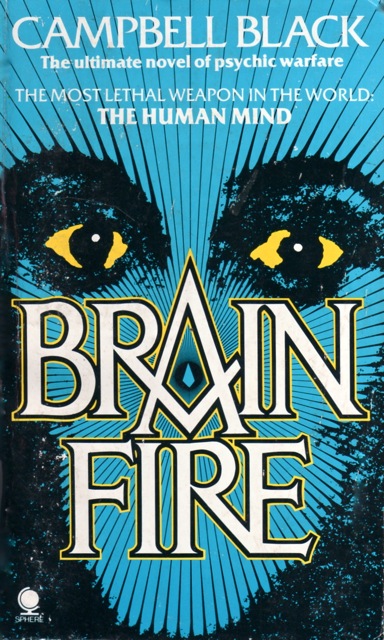
Born on this date in 1944, Campbell Armstrong was a Scottish author who died in 2013 and wrote many thriller/horror novels under a handful of pseudonyms. These paperback covers from publishers in the US and the UK are nicely indicative of that '80s era...


Tuesday, August 12, 2014

Blackwater VI: Rain by Michael McDowell (1983): You're Gone Make Me Lonesome When You Go

Power wills death itself in the final chapter of Blackwater, the six-volume saga of Southern life in a small Alabama town called Perdido. Rain (Avon Books, June 1983) has Michael McDowell concluding with a drenching torrent that seems to drown the whole world, or at least Perdido itself, and for its inhabitants that's enough. I'll tell you I was a bit bummed to come to final chapter of this weird, Southern Gothic-lite saga of the wealthy Caskey clan and their family entanglements, both natural and not, as I've been reading Blackwater slowly over a year and a half. Honestly, I think I did it wrong: the whole series comes to a total of around 1,100 pages so I spaced my reading out, but now I really wish I'd read them  closer together so I could've gotten fully immersed in them. Oh well. (Some spoilers in this review).

 
Michael McDowell (1950 - 1999)

Now set in the 1960s, we begin with the conflict between spinsterly invalid Sister Caskey and her niece Miriam (daughter of Elinor, the inhuman--or more than human--woman who married into the Caskeys), who runs the family sawmills and has enriched their bank accounts immeasurably, and continues to do so. Sister had taken to bed on account of a supposed weakness in her legs. And in order to avoid her husband, she had kept to that bed, willing her legs to wither... More and more demanding and dismissive and dramatic, it is noted Sister is becoming more and more like the last Caskey matriarch Mary-Love, whom nobody much misses save Sister. In a moment of rational decision-making she's known for, Miriam decides she will marry milquetoasty Malcom Strickland, the family closest to the Caskeys. 

This upsets Sister and she insists they hold off the wedding, but Miriam will hear none of it. The wedding goes on, an enormous affair to which all Perdido and many important folks known through Miriam's successful business dealings are invited. Sister stays in her room, and while Oscar--Miriam's father, Elinor's husband--sits at her bedside comforting her, Sister passes. Out of spite, it seems!

The odd family tradition of giving up children to other family members continues: in this last volume, Billy Bronze and (the late--or, more accurately, the "late") Frances's daughter Lilah, first living with her grandmother Elinor, comes to live with Miriam and Malcolm, as they cannot bear their own children. With Miriam's guidance and to Elinor's dismay, Lilah begins exhibiting the willful imperiousness of Mary-Love and Sister; she toys with the affections of young Tommy Lee. He lived with his mother Lucille and her "partner" Grace Caskey on an enormous farm, but now lives with his grandmother Queenie Strickland (Malcom's mother--got all that?). Elinor wishes Lilah and Tommy Lee would marry and produce offspring to keep Miriam and Malcolm company as they age, and ensure the Caskey clan continues. This is not to be; Lilah will not be a pawn in the Caskey game.
It gradually became known in Babylon and Perdido that Tommy Lee had been disappointed in love. He had hoped, and all his family had hoped, that he would marry Lilah Bronze; Lilah, herself trained by Miriam, had done a sort of Miriam-like thing and married herself to a man with name that was two inches long and who declared on a stack of Bibles that he would never set foot in Alabama again.
Lilah even gets Tommy Lee to go to college so she, still a high schooler, can be invited to the awesome and socially important frat parties. With Tommy Lee gone, Queenie Strickland cannot bear to be in her house alone; strange noises assault her while she tries to sleep. One night she hears bootsteps outside and when she peeks out and sees it was Carl Strickland, her husband, who had been dead these thirty years, drowned in the black waters of the Perdido. *shiver* Queenie is found cold and dead the next morning, two quarters, each bearing the date 1929, were pressed over her eyes, and the key to the house was stuck in her mouth.

Hardcover omnibus editions from SF Book Club

McDowell engages in more of his patented quiet, weird, Southern Gothic scenes of horror and the macabre: Queenie's torment and death, and Tommy Lee returns and while boating through the swamp has the fright of his life when he's attacked by a creature unlike any swamp denizen he's ever known. The voices that blind, aging Oscar hears, of his mother Mary-Love and a little boy who died in the Perdido decades before, draw him into a dark embrace.The ugly death of this good, caring man by monstrous hands that stink of that river is heartbreaking. In his home Billy Bronze hears voices too, of his late wife Frances and Nerita, the daughter he never knew who lives and hungers in dark waters, singing and talking with Elinor in her room. In the morning the stairs' carpet is damp with river water. He is not afraid however:
The three voices--female but not human, Billy thought--went on for more than an hour, lasting as long as the rain. But as the rain slackened, so did the three voices. When the water was no more than an irregular dripping from the eaves, the singing stopped altogether. Billy had long ago lost the habit of prayer, but now he prayed for the clouds to return, and to open up above the house in hope that voices might again unite in song.
Then the rains come, long and incessant, and the government arrives and sees the levees will not hold and insists on evacuating Perdido. Most leave, but not Billy Bronze, not long-time family help Zaddie Sapp, not Elinor Caskey, who now lays dying in her bed. She has sent everyone but those two away, and the waters rise and rise on the Caskey house as Billy and Zaddie keep a death watch on this mysterious matriarch whose connection to those waters is the stuff of myth and legend... and the end comes for our family saga in the manner we knew from the start: Without further heralding, the water set about to wipe Perdido from the face of the earth.

1985 Corgi UK edition, lovely cover art by Terry Oakes

Yeah, I was bummed when it was over. For all its pluses, however, I don't quite rate Blackwater as highly as I do McDowell's standalone novels The Amulet, Cold Moon over Babylon, and The Elementals; I could've used even more horror or supernatural strangeness in these 1,100 pages, but that's just me. Sometimes the narrative drive is listless; the writing underdone; the family drama too drawn out. But there's plenty to enjoy too, in this unique family saga unlike anything else published in 1980s horror fiction. For modern readers Blackwater exists for Kindle; I believe Valancourt Books is trying to publish the series in trade paperback as they have two of McDowell's other novels; and Centipede Press is set to put out a schmancy illustrated hardcover as well next year. In whatever form you choose to read of the Caskey family's strange and sodden journey through the 20th century, in vintage paperback or as ebook, I think you will agree it is one worth taking, and that Michael McDowell is the perfect guide.

My review of the entire Blackwater series is on Tor.com; go here to read it.

Wednesday, April 23, 2014

Go Waltzing Mephisto with Me

I present for your satanic delight a "classic" post-Rosemary's Baby occult horror novel, The Mephisto Waltz (1969), from a writer who would go on to write bestselling mainstream historical fiction about the Civil War and whatnot. Great covers all around, from both the US and the UK. All but the original 1970 Signet paperback below highlight the nude female form, titillating potential readers about what might reside within. But I'm not surprised to learn the novel (and its 1971 movie adaptation starring horror-film icon Alan Alda) is fairly lackluster and lame; check out The Midnight Room review, in which it's referred to as "late '60s quasi Satanic hooey." Ha!


Wednesday, December 4, 2013

Blackwater V: The Fortune by Michael McDowell (1983): A Newborn Baby with Wild Wolves All Around It

The Caskey family saga may be coming to a close but you wouldn't know it by the activity seen in this fifth volume of the Blackwater series, The Fortune (Avon, May 1983). Miriam Caskey is indeed amassing her family's fortune by hiring a Texas oil company to drill into the Perdido swampland on their property, after her estranged mother, the ever-mysterious Elinor, reveals that beneath its inky roiling depths there are pools of crude worth countless riches. How does she know? She just does. Meanwhile Queenie Strickland receives her erstwhile son Malcolm back into the family's bosom after being assumed missing in action, or even dead, after running away four years earlier.  Miriam's sister Frances gives birth to a daughter, and Frances's husband Billy Bronze oversees the accounting books of the Caskey mill, astonishing each family member by declaring just how much money they have during these post-WWII years.

However not everything is going so swimmingly for every Caskey: Elvennia Caskey, known as Sister, is distressed to learn that her husband Early Haskew - who married Sister in The Levee - will soon be home from Germany, after helping the Allies building bridges. She has no interest in seeing him again: "Why in the world did so many people die in the war, and Early's coming back alive!" Sister enlists the help of their longtime black servant, Ivey Sapp, but this results in a humiliating accident (see the broken bottle at the bottom of the steps on the Avon cover, illustrated by Wayne D. Barlowe). Poor Billy Bronze fears Frances is growing apart from him and their newborn baby Lilah, and even though he accompanies his sister-in-law Miriam on the profitable business trips to Texas, he grows insecure about his position in the Caskey brood. Once, he was the golden boy: 

When he set his mind to something, he walked right in at the door and did it. When he had got it into his head to become part of the Caskey family, he had picked out a marriageable daughter, wooed her, won her, married her, and got her pregnant in order to produce more Caskeys. The Family 's admiration for him was unbounded.

1985 Corgi UK edition, cover art by Terry Oakes

But now Frances disappears each afternoon to swim deeply and luxuriously in the Perdido waters, leaving her daughter to the care of Elinor... much as Elinor had given up her first daughter, Miriam, to her own mother-in-law Mary-Love in the first volume. What happens to Frances as she visits those watery depths (illustrated nicely above, for the 1985 Corgi UK paperback cover)? She becomes almost a different person, something different altogether, which Billy notices. Sadly he is to have no part of her rejuvenation, and knows he will soon lose her. The day was chilly, but she was barefooted, bareheaded, and naked beneath her loosely gathered robe, having just come in from her swim. When he first saw her, she was smiling and radiant. But the smile faded the moment she glimpsed him the dimness of the corridor.

Reading The Fortune over several months, putting it down for a couple weeks then picking it up again, I found it middling in the series. As is his wont, Michael McDowell takes his time telling this story, focusing on details that some readers might find irrelevant or overly slight; even in this slim volume - not even 200 pages - the narrative is leisurely, with only a few spikes of real melodrama and mild horror. Tension is lacking in spots but that makes it kind of a cozy, informal historical read. As ever he's good at interpersonal relationships, drawing out the peculiarities of his characters and their insecurities, and he's best at evoking darkness and dread. Which I wish there had been more of... especially this:

Throughout the series, McDowell has whispered hints of a non-human origin for Elinor, a nature which has been passed on to Frances - witness Frances's strange supernatural revenge upon a rapist in The War. Their mythic kinship to one another and to the Perdido River speaks of Jungian shapeshifters, of ancient legends about the dark powers of women and water... and the children they bear. Lilah is not the only offspring Frances bears one night in The Fortune; there is another child too, one that Zaddie, Ivey Sapp's daughter, catches the merest glimpse of when assisting in the childbirth:

Zaddie turned to turn out the light, but as she was turning she glimpsed a second head emerging smoothly from Frances's quietly heaving body. It was greenish-gray, and it seemed to wobble. Zaddie saw two wide-open, perfectly round filmy eyes, and two round black holes where a nose ought to have been...

Two-volume hardcover
Science Fiction Book Club, 1983

Can there be any doubt where this strange creature will find its home, that it shares its mother's and grandmother's inhuman heritage, and that its mother will leave behind all the Caskeys and join it? We know when Elinor places this mewling newborn into Frances's arms for the first time:

"What's wrong with her?" Frances asked. "Why is she crying like this?"
"She's drowning," said Elinor.
"Drowning?!"
"In the air. She needs to be in water..."