Quelle horreur! And it continues, these covers for French translations of some terrific vintage horror (for more, much more of these as well as artist info, go here). For their splatterpunk magnum opus The Scream (1988), Skipp & Spector get a Heavy Metal-esque cover, pretty fitting considering the metal mayhem contained within.
Ah, The Cipher! Here, Kathe Koja's stunning debut novel becomes "Breach of Hell," fitting, although the cover image doesn't quite capture the amorphous quality of the cipher itself, which was basically a nothing... Still, creepy cool.
A simplistic, not too impressive rendition of Fletcher and Jaffe, the warring spiritual duo in Barker's 1989 novel of the fantastique, The Great and Secret Show.
Holy shit is that terrifying. And erotic. And terrifying. Nice work! Don't know this book by the recently late Gary Brandner, who is most famous for writing The Howling (1977).
A glorious rendition of the images contained in Poppy Z. Brite's essential 1993 short story collection, variously known as Swamp Foetus and Wormwood. I believe the title translates as "Stories of the Green Fairy," that being an old literary term for absinthe - clearly visible and ready for the imbibing. Watch out for Kali though!
This noxious cover reminds me that I really need to reread The Fog since I really member nothing about it; the James Herbert classic from 1975 is highly praised for being a pure pulp delight in Steve King's Danse Macabre. But you knew that.
A gorgeously Gothic and evocative work of art for Straub's 1980 novel. "La terre l'ombre," if my high school French serves, could've been the translated title.
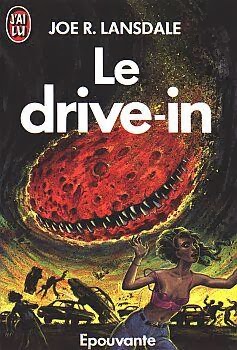
Last but not least, Lansdale! Lurid and lusty. Lovely!
Showing posts with label poppy z. brite. Show all posts
Thursday, January 2, 2014
Monday, December 30, 2013
Paperback Horror: French Editions
Mon Dieu! Imagine my delight upon discovering these French editions of classic horror novels. French covers seem more likely to feature art that corresponds to the novel they adorn. J'ai Lu ("I read") is a French publisher, while "Épouvante" means "terror," so you can guess what's going on here.
At top is Joe Lansdale's blistering The Nightrunners (1987), and its French title translates nicely as "Children of the Razor."
Although this cover might look generic - snakes n' skulls! - both title (translating as "Scales") and image are relevant to the story John Farris tells in 1977's All Heads Turn As the Hunt Goes By.
"Mindless" - a perfect translation of Bad Brains, Kathe Koja's second novel from Dell/Abyss, published in '92, about a failed artist whose vision and imagination are being assaulted by a silvery nightmare.
1980's Firestarter's title was simply changed to Charlie, the little girl's name, which I like a lot as it links up with Carrie, Cujo, and Christine.
The black-and-white photos here of blank-eyed men make me think of the various kinds of WWII survivors, which Clive Barker touches upon in his first novel The Damnation Game, from 1985.
I haven't read Ramsey Campbell's 1986 novel The Hungry Moon, but I love how this cover evokes his gloomy, opaque, quiet style of horror.
This is kinda-sorta what's going on in Brian Hodge's third novel Nightlife (another Dell/Abyss title, from 1991); while it does involve some creature transformation, I don't remember any boobs.
Sometimes the French covers aren't so accurate; Nightwalkers, from '79, is a somber, ambiguous "werewolf" novel, and the subtle prose of Thomas Tessier is rarely if ever used for this kind of graphic monster shock.
A severed head adorning this cover for Song of Kali, Dan Simmons's seminal 1985 work of exotic horror? Mais oui.
And androgynous punk vampires, no doubt about it - this has got to be Poppy Z. Brite's classic first novel from 1992, Lost Souls (the French title is a literal translation this time).
More, as they say, to come!
At top is Joe Lansdale's blistering The Nightrunners (1987), and its French title translates nicely as "Children of the Razor."
Although this cover might look generic - snakes n' skulls! - both title (translating as "Scales") and image are relevant to the story John Farris tells in 1977's All Heads Turn As the Hunt Goes By.
"Mindless" - a perfect translation of Bad Brains, Kathe Koja's second novel from Dell/Abyss, published in '92, about a failed artist whose vision and imagination are being assaulted by a silvery nightmare.
The black-and-white photos here of blank-eyed men make me think of the various kinds of WWII survivors, which Clive Barker touches upon in his first novel The Damnation Game, from 1985.
I haven't read Ramsey Campbell's 1986 novel The Hungry Moon, but I love how this cover evokes his gloomy, opaque, quiet style of horror.
This is kinda-sorta what's going on in Brian Hodge's third novel Nightlife (another Dell/Abyss title, from 1991); while it does involve some creature transformation, I don't remember any boobs.
Sometimes the French covers aren't so accurate; Nightwalkers, from '79, is a somber, ambiguous "werewolf" novel, and the subtle prose of Thomas Tessier is rarely if ever used for this kind of graphic monster shock.
A severed head adorning this cover for Song of Kali, Dan Simmons's seminal 1985 work of exotic horror? Mais oui.
And androgynous punk vampires, no doubt about it - this has got to be Poppy Z. Brite's classic first novel from 1992, Lost Souls (the French title is a literal translation this time).
More, as they say, to come!
Labels:
'70s,
'80s,
'90s,
brian hodge,
clive barker,
favorite,
french,
joe lansdale,
john farris,
kathe koja,
poppy z. brite,
ramsey campbell,
read,
stephen king,
thomas tessier
Tuesday, June 18, 2013
The Amulet by Michael McDowell (1979): The Valancourt Books Edition
Good news, vintage horror fiction fans: Michael McDowell's debut 1979 horror novel The Amulet has been brought back into print by specialty publisher Valancourt Books. As you can see, it boasts an introduction by another TMHF fave, the now-retired Poppy Z. Brite, which features some background on the writing of the novel and McDowell himself. Also of note: to my great surprise and complete delight, quotes from this blog are featured both on the back of the book - I've become a blurb! - as well as in Brite's intro. What! It's true. Anyway, I don't think you'll be disappointed if you drop a few bucks for this nicely-produced title from a publisher who knows just what it's doing. We can hope that more of McDowell's incredible '80s horror fiction will be treated in just the same way. Purchasing info here.
Labels:
'70s,
favorite,
michael mcdowell,
novel,
poppy z. brite,
read,
southern gothic,
valancourt books
Friday, February 25, 2011
Dell/Abyss Books: The Paperback Covers
It was 20 years ago this month that the Dell/Abyss line of contemporary horror fiction began publication. Yes, 20 years! Ah, I remember it well. This imprint from Dell Publishing was spearheaded by Bantam Doubleday editor Jeanne Cavelos in an attempt to give the paperback horror genre a boost of originality and conviction - and, of course, a boost in sales - as it had long been plagued by tired cliches and half-hearted imitations of better books and writers. The appropriately-named Abyss was intent on publishing works that plumbed dark depths of psychology and the supernatural not for cheap, exploitative, escapists thrills but for more disturbing and revelatory chills. This kind of horror was interiorized, found not in a Gothic mansion or small town overrun by vampires but in the blasted landscape of the human mind.
The Abyss paperback originals used striking cover design - haunting, creepy, anguished faces and tormented bodies, albeit perhaps sometimes a tad clumsy - to separate themselves from the anonymous bloody skulls, graveyards, and evil babies then on horror covers. The icon on the spine of its books was a mark of distinction; indeed, Abyss even had a mission statement:
Launched in February 1991 with Kathe Koja's stunningly bleak and unsettling The Cipher, Abyss published one title a month, ending up with more than 40 titles overall. Most of the authors were first-time novelists, or at least writers with only a few books under their belts, but in the case of MetaHorror (July 1992), an anthology edited by ever-present '80s author Dennis Etchison, the line also featured well-known horror masters. Women writers were plentiful - the most successful was easily Poppy Z. Brite - and guys like Brian Hodge and Rick R. Reed really got started here. What they all had in common was a desire to do something new with horror fiction. But, for various industry reasons, Abyss folded later in the '90s and my love of current horror pretty much went with it.
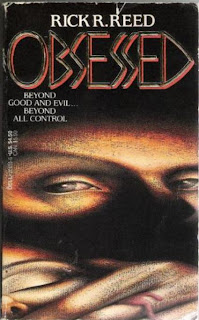
I'm not exactly sure how I first heard of the Abyss books; it may have been a Linda Marotta review in Fangoria, or maybe a review from the Overlook Connection catalog. Reading Koja, Brite, Hodge, and others back then was a revelation, one of the most exciting times I've had as a horror fiction reader. I doubt all the novels and two short story collections were as "cutting edge" as promised, but I always loved the ambition and the effort. Some writers launched new careers, others weren't heard from again. I've read a handful over the years but nothing could compare to Koja's first two novels, or Hodge's Nightlife (March 1991). Still, the Dell/Abyss line was a great moment in paperback horror, and deserves to be remembered today. Most titles are readily available used, cheap (ah, except The Cipher, which has now gone to collectors' prices!) on Amazon, eBay, ABE, and the like. The following are a random sample.
Facade, Kristine Kathryn Rusch (February 1993)
Lost Futures, Lisa Tuttle (May 1992)
Post Mortem, ed. by Paul Olson and David Silva (January 1992)
X, Y, Michael Blumlein (November 1993)
Shadow Twin, Dale Hoover (December 1991)
The Wilding, Melanie Tem (November 1992)
Tunnelvision, R. Patrick Gates (November 1991)
Making Love, Melanie Tem & Nancy Holder (August 1993)
Dusk, Ron Dee (April 1991)
Dead in the Water, Nancy Holder (June 1994)
Bad Brains, Kathe Koja (April 1992)
You can read here a long, detailed, scholarly look at the nuts-and-bolts of the Dell/Abyss line, "The Decline of the Literary Horror Market in the 1990s and Dell's Abyss Series": What makes the Abyss line a cultural phenomenon worthwhile of study is its self-conscious positioning within the declining horror market. Its marketing strategies, text selection, and construction of a commodity identity speak volumes on the horror market and its transformation at the time.
This image thanks to Trashotron
Subscribe to:
Posts (Atom)