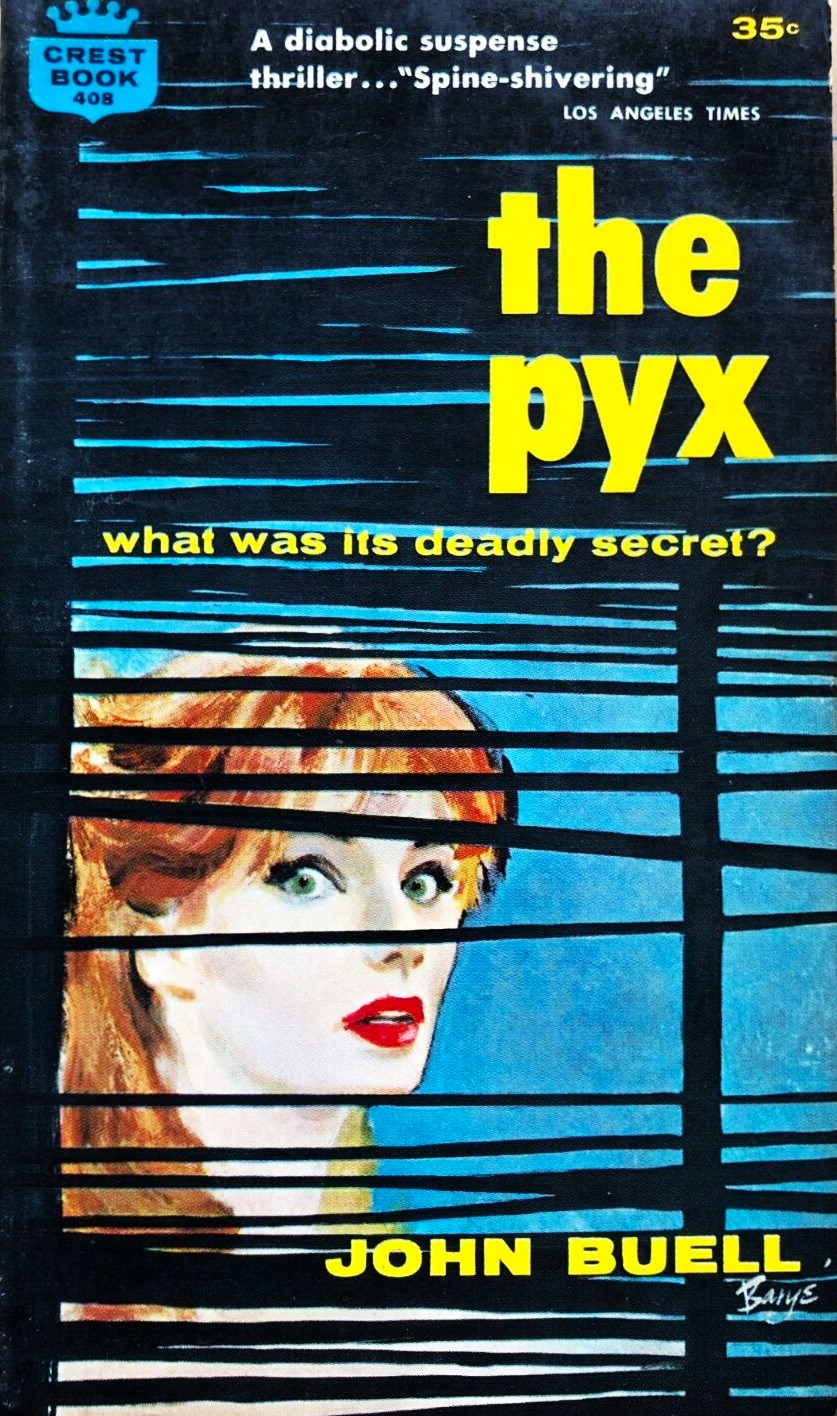
With the finely-detailed image of a nude willowy blonde, tresses flowing, nipples bared, stomach taut, slim legs, and arched feet in full Playboy-model effect, the cover art for
The Pyx promises a helluva lot! Especially for the Sixties when it was originally published by Popular Library (no specific pub date given, nor is artist identified). This little guy was on my want-list for a few years till I lucked upon it for only a few bucks on eBay. Sure, it practically fell apart as soon as I opened it, cover popping off spine, oh well, who's complaining? Should I be surprised that there is no naked woman in the book, nor creatures with disparately colored eyes? Do I demand my money back when reading this novella-length paperback that is basically a crime story about a dead prostitute, her madame, gay friend, criminal consorts, and the dogged detective on the trail of her death? No, I do not.
John Buell (1927 - 2013), a little-known Canadian author and professor, is a fine, insightful writer, starting his book off with a bang and drawing the reader right in with a nice grasp of place and character. A woman has dropped from an apartment window several stories high, accident or suicide no one knows, but it's Detective Henderson's job to find out. Now, you've seen and read this tale a thousand times. And in all the years I've known about
The Pyx, reading about the movie version with Karen Black, the words "occult" and "satanic" always filtered about it. I don't know what a pyx is, who does, Buell knew no one really would so its
definition is at the beginning of the book: in Catholic ritual, it's a little vessel that holds the Host. Sure, whatever.
What a pyx is not, however, is a little demon or genie or ghostie or ghoulie that I, in my religious ignorance, had originally idly wondered it may be. And if there is any "occult" or "satanic" to be found here, it sailed entirely over my head. But I went back and reread the penultimate chapter, the ultimate confrontation between Henderson and the guilty party, and I suppose I could see where Buell was hinting at some "otherworldly" aspect to his narrative (
"Die? I can't die. I'm immortal."). The very last line put me in mind of
Ray Russell or
William Peter Blatty, but only in an indirect way.
Too much of this story is coy and reticent, since it deals with a sex worker with a drug problem and it was written in the late Fifties by a Canadian: referring to actual sex acts or drug-taking logistics is simply out of the question in those pre-
Naked Lunch days, and the impact of this sordid work is muted almost beyond comprehension. Those cover blurbs announcing "eerie" and "powerful" and "the secret" and "climax of diabolic evil" are so much hot air, alas (I can't speak at all to the Graham Greene reference, I mean I know who he is, but in this context, not really).
A few scattered moments of violence, sure, but nothing you wouldn't have seen elsewhere in the era. For the most part, despite some rock-solid prose on Buell's part, I found it a standard detective story, populated with the typical various lowlife characters, flashbacks to the dead girl's life and hopes and failures, you know what I mean. I've seen good reviews of
The Pyx online, sure, I'm glad people dug it, but for me, it really missed the vein. But that cover, man...